


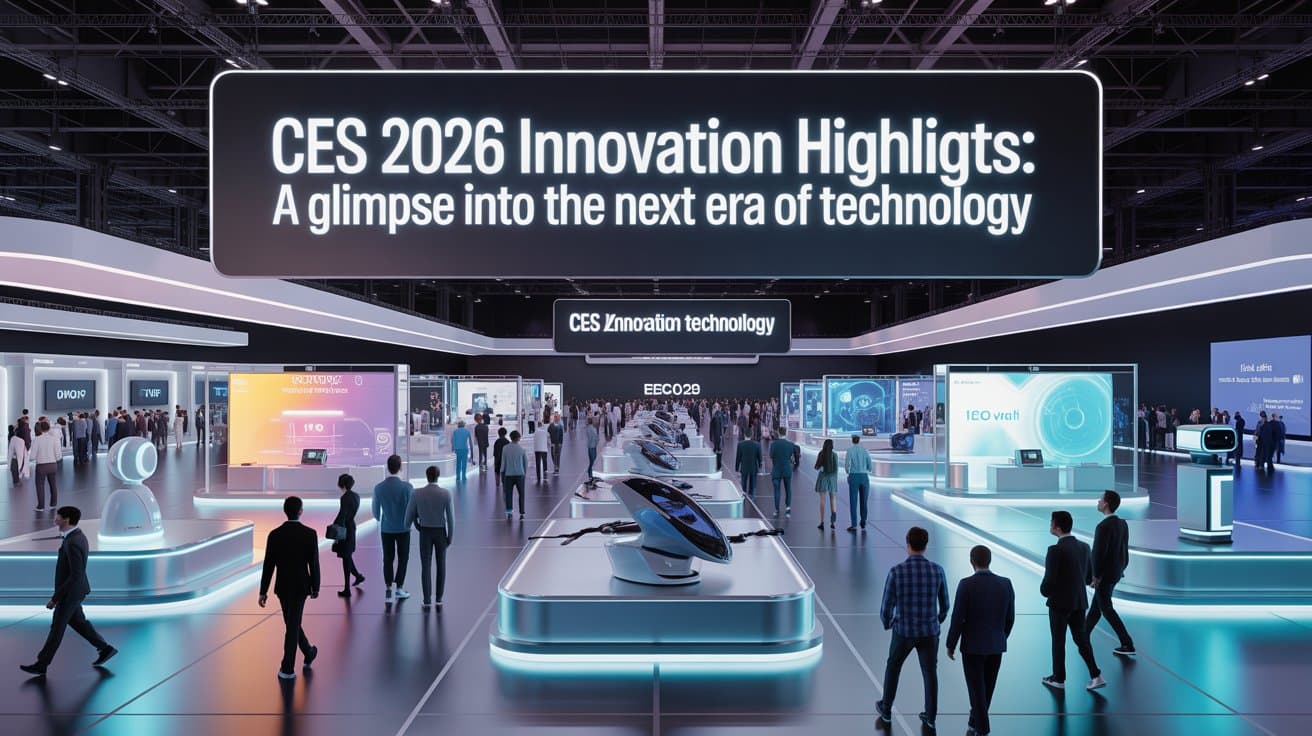
Not long ago, robots were confined to controlled environments, factory floors, research labs, or scripted demonstrations. Their movements were precise but predictable, and their intelligence was limited to predefined tasks. CES 2026 signaled a clear departure from that past. This year, robotics took a decisive step toward becoming adaptive, responsive, and genuinely useful in everyday settings.
This transformation is led by physical AI systems that pair powerful intelligence with the ability to sense and move in the real world. These machines are not just processing data; they are understanding their environment, learning from experience, and deciding actions in real time. CES 2026 showcased how physical AI is revolutionizing robots, making them more than tools that follow instructions and enabling them to become human partners in the workspace.
Artificial Intelligence Takes Center Stage
The defining feature of CES 2026 was artificial intelligence, which appeared across nearly every showcase. Rather than being treated as a separate feature, AI is now integrated into almost every product category.
Leading semiconductor and technology firms revealed future AI platforms that will perform complex reasoning, make real time decisions, and have on device intelligence. These innovations mark a shift from cloud reliant AI to more intelligent edge computing, enabling quicker responses, better privacy, and more tailored experiences.
From laptops and smartphones to smart home systems and automobiles, AI is becoming the invisible engine powering everyday interactions, learning user behavior, anticipating needs, and enhancing efficiency without constant input.
The Rise of Physical AI and Robotics
CES 2026 also marked a significant step forward for robotics. This year’s innovations focused on what many call physical AI: intelligent systems that can move, sense, and interact with the real world.
Robots showed they can do much more than serve as novelties. Home robots focused on better mobility and effective task completion, while industrial and service robots demonstrated potential in logistics, healthcare, and manufacturing. These robots are developed to work with humans, not replace them, making workplaces safer and more productive.
What caught my attention was adaptation as the focal point. Robots with state-of-the-art AI models are now able to sense their surroundings, quickly alter behavior, and carry out complex tasks with less human supervision.
Displays and Entertainment Enter a New Dimension
Visual technology surged ahead at CES 2026. Display makers unveiled gigantic micro LED screens, ultra high resolution panels, and next generation display technologies that offer new levels of immersion.
However, beyond size and clarity, the main innovation was the experience. Spatial displays and 3D viewing technologies suggest a future where screens have depth and viewers sense reality without special glasses. These developments will suit not only entertainment but also education, design, healthcare, and remote collaboration.
The message was obvious: displays are shifting from being only a passive viewing tool to becoming a new interactive, immersive environment.
Smarter Devices That Understand You
Another significant point was the growing intelligence of ordinary devices. Products for smart homes, wearables, and personal assistants are becoming more context aware, not just receiving but also understanding commands and intent.
Wearable technology showed it can comprehensively monitor health and wellness, turning raw data into valuable, practical information. Smart assistants are no longer limited to voice commands; by integrating into homes, vehicles, and personal devices, they now deliver a unified, personalized experience.
This trend shows technology is adapting to users, rather than users having to adapt to it.
Innovation Beyond the Obvious
CES has always been known for creative and unconventional innovations, and 2026 delivered as well. From experimental audio devices to AI-powered lifestyle products, the show floor was filled with ideas blending functionality and imagination.
While some concepts may seem niche today, many of these “unexpected” innovations often influence mainstream products in the years to come. CES continues to be a proving ground where bold ideas find their first audience.
What CES 2026 Tells Us About the Future
CES 2026 made one thing clear: technology is moving toward deeper integration, greater intelligence, and more human-centered design. The focus is no longer just on faster processors or smarter software, but on creating systems that understand context, interact naturally, and deliver value.
As AI becomes foundational, robotics more practical, and immersive technologies more accessible, the line between digital and physical experiences continues to blur.
Closing Thoughts
CES 2026 was not just a showcase of innovation; it was a preview of how technology will shape daily life in the coming years. The ideas and products unveiled this year point to a future where technology works quietly in the background, enhancing how we live, work, and connect.
For businesses, creators, and consumers alike, the innovations from CES 2026 are more than trends, they are signals of what’s next.