


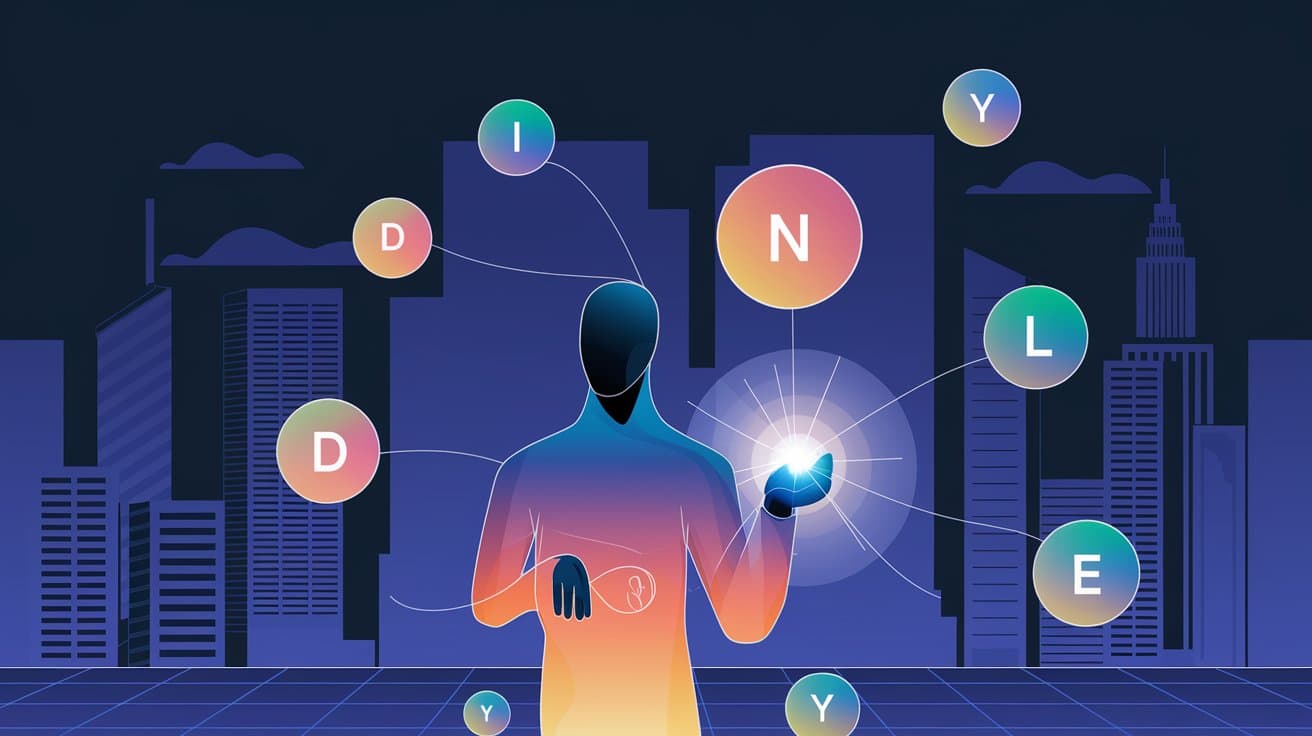
In the contemporary digital age, the value of personal data has increased remarkably. From opening multiple social media accounts to general healthcare services, users continually share personal data with third parties. Unfortunately, the centralized repositories of identity management and personal information sharing often leave the users vulnerable due to data breaches, misuse, or loss of control. There comes the importance of Decentralized identity, which acts as a revolutionary way to empower the individual with ownership and control of personal data.
Decentralized identity is a framework based on blockchain technology and cryptographic principles that allow for a secure, self-sovereign digital identity. Instead of depending on authorities like governments, corporations, or social media platforms to verify and store user data, decentralized identity solutions aim to restore control to individuals.
Decentralized identity depends on two key building blocks, namely decentralized identifiers (DIDs) and verifiable credentials (VCs):
DIDs: Unique, self-owned identifiers, free from the encumbrances of a centralized registry or authority.
VCs: Tamper-proof, digitally signed credentials that users may selectively share with service providers.
Why Decentralized Identity is Important For Organizations?
- It enables enterprises to quickly confirm the validity of IDs, certificates, or papers without contacting the issuing entity, such as a university or driver's license agency. Conventional manual verification procedures take weeks to months, which wastes a lot of money and human resources and delays the hiring and processing periods. Imagine having the ability to quickly and easily validate someone's credentials by either scanning a QR code or using an easy-to-use credential verifier tool.
- Prevents certificate fraud
- Public-key cryptography provides enhanced data security by securely encrypting and decrypting data.
- Stores less user data, thus lowering the chance of being targeted by cyberattacks.
Instantaneous credential verification is advantageous for several use cases, such as expediting the employment process and lowering the possibility of hiring someone without the necessary qualifications.
Why Decentralized Identity is Important For Individuals?
Decentralized identity solutions give full control and ownership to users, hence facilitating verifying accounts without third-party pointing fingers. They also make browsing without a device and detailed tracking quite feasible. Decentralized identities empower users with notions of who gets information regarding them and provide irrevocability once their decentralized identity is stored within the mobile digital identity wallet. Users are also provided with tools to prevent unwanted information from spreading.
Is Decentralized Identity The Same as Self-Sovereign Identity (SSI)?
Self-sovereign identity (SSI) is another concept synonymous with decentralized identity. While the terms can be used interchangeably, they are far from similar. SSI is identity management whereby the user's identity is not stored by an identified provider in a central location. In the SSI approach, users store their identity information through private solutions using decentralized identifiers and verifiable credentials. Decentralized identity does not have to be self-sovereign in the way that individual users entirely manage and exercise direct control over their user identity. Instead of keeping the whole user identity on the user's system, the decentralized identity approach stores the identity in a distributed ledger.
Aventus: Supporting The Vision of Decentralized Identity
Although Aventus does not build decentralized identity solutions directly, the principles of privacy, security, and user empowerment that establish this transformative technology resonate deeply with us. By supporting innovation and backing projects that take a user-centric approach, Aventus is helping to develop a future in which individuals can seek control over their digital interactions.
Our eyes are set on the future, drawing forth any advancement enhancing a trustable and autonomous digital existence, by bringing various partners and stakeholders on board to usher in a robust and privacy-respectful ecosystem.
Conclusion
The development of a decentralized identity will break the paradigms of thought concerning digital exchanges and data ownership. The control of personal information in the hands of individuals promises to bring about a more secure, private, and user-centric digital ecosystem. While Aventus’ role is mainly aligned with support and advocacy, we are proud to be part of the broader effort to enable a world where trust, privacy, and innovation thrive.