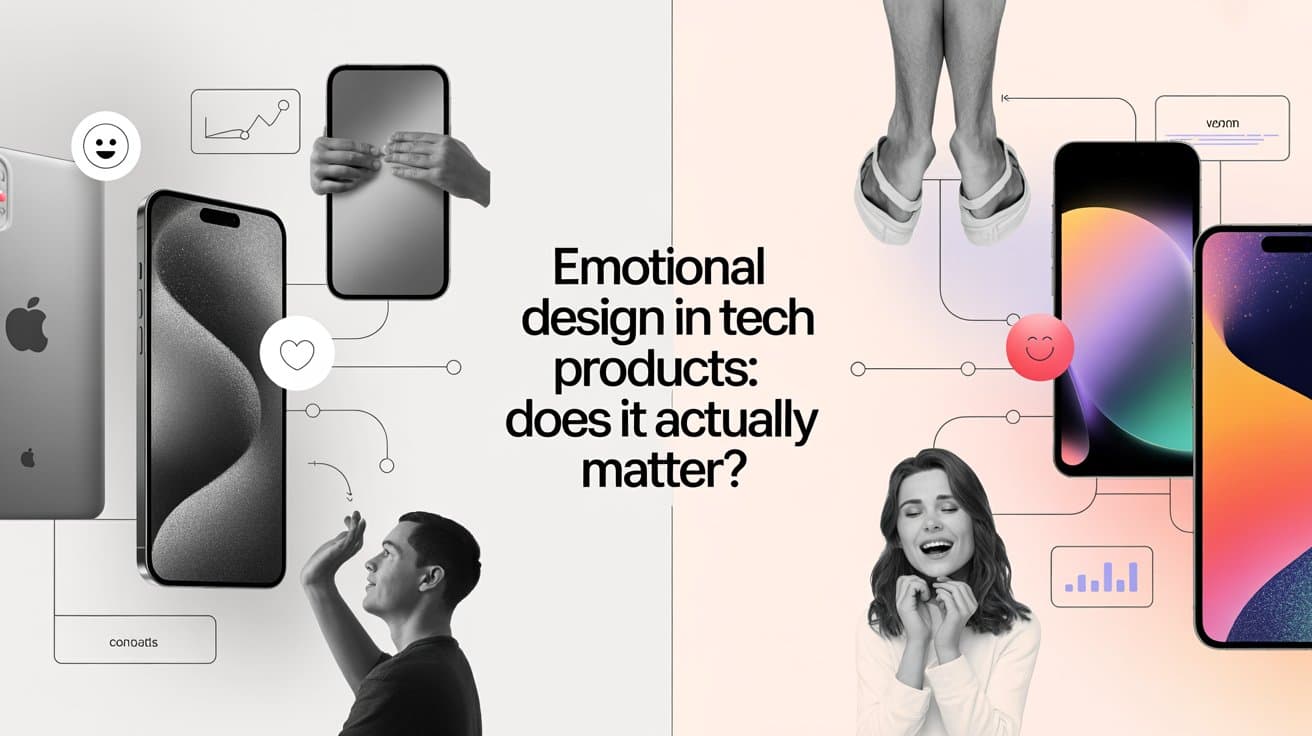
Technology has become incredibly efficient. Apps load faster, dashboards are cleaner, and automation reduces friction at every step. Yet despite all this progress, many tech products still fail, not because they don’t work, but because they don’t connect.
This is where emotional design enters the conversation.
Emotional design is often misunderstood as something superficial; pretty interfaces, smooth animations, or playful micro-interactions. But in reality, it goes much deeper. It’s about how a product makes users feel while they’re using it, and more importantly, how those feelings influence trust, memory, and long-term adoption.
Most technology products can match each other's functionality in a short period of time. Features can be imitated, workflows can be optimized, and performance benchmarks can be matched. What differentiates the product, however, is its user experience.
Take for example, the difference between a device that only accomplishes the task versus one that also comforts you while doing it.: a calm error message instead of a loud, aggressive alert; a sense of progress rather than uncertainty; and subtle feedback that reassures the user that they are doing the right thing. On the surface, such "moments" do not improve the functionality, but they radically change how the product is perceived. Users become more tolerant of minor flaws, more confident in their choices, and more likely to come back.
At its core, emotional design reduces mental load. When an interface feels intuitive, predictable, and human, users don’t have to “think” as much. This creates a sense of ease, often interpreted emotionally as comfort, control, or trust.
In high-stakes tech products such as financial platforms, HR systems, health apps, this becomes critical. Users aren’t just interacting with software; they’re navigating anxiety, responsibility, and decision pressure. Emotional design helps soften these moments, making complex systems feel manageable rather than intimidating.
We tend to describe trust in technology as rational and measurable terms such as data security, compliance, transparency. However, trust is also emotional. Users are more likely to trust products that appear to be stable, considerate, and consistent. A well, designed onboarding flow has the power to relieve anxiety. Understanding words can alleviate the fear of making errors. Microcopy that is focused on the user can give the impression that the system is less formal and more encouraging. These emotional cues, gradually, become a habit. The product thus ceases to be "a tool" and instead becomes "a reliable partner."
Yes, but not always in obvious ways.
For example, emotional design's impact can typically be seen in multiple metrics, such as:
A reduction in churn because users feel comfortable returning
An increase in engagement due to a rewarding experience
A stronger recall of brand image or memory because of the emotional connection to that experience, rather than just its features
A higher rate of advocacy towards your brand from customers recommending 'experiences' vs. 'specifications'.
While emotional design's benefits may not always be obvious, they often play a significant part in determining which product will remain in a highly competitive tech market.
Emotional design is not a matter of adding fun points all over the place. That will probably feel manipulative, even cheesy. What's powerful is understanding the emotional needs of your users at any given point.
The best tech products are not ones that announce themselves loudly. The ones that work well are the ones that understand their users.
Also, in a world populated by intelligent systems, the value of human understanding may well prove the strongest differentiator of all.
At Aventus, emotional design is an integral part of the way we develop products right from the start and is not simply added as a visual layer at the end. Essentially, every interface, interaction, and flow are influenced by a profound understanding of the users' cognitive, emotional, and behavioral aspects in genuine situations.
By analyzing emotional triggers, decision fatigue, and moments of uncertainty, Aventus devises technology that is not only intuitive but also comforting and human. The objective goes beyond usability; it is about designing products that lessen friction, earn users' trust, and emotionally connect with them, thus, transforming routine interactions into significant experiences rather than mechanical tasks.


