


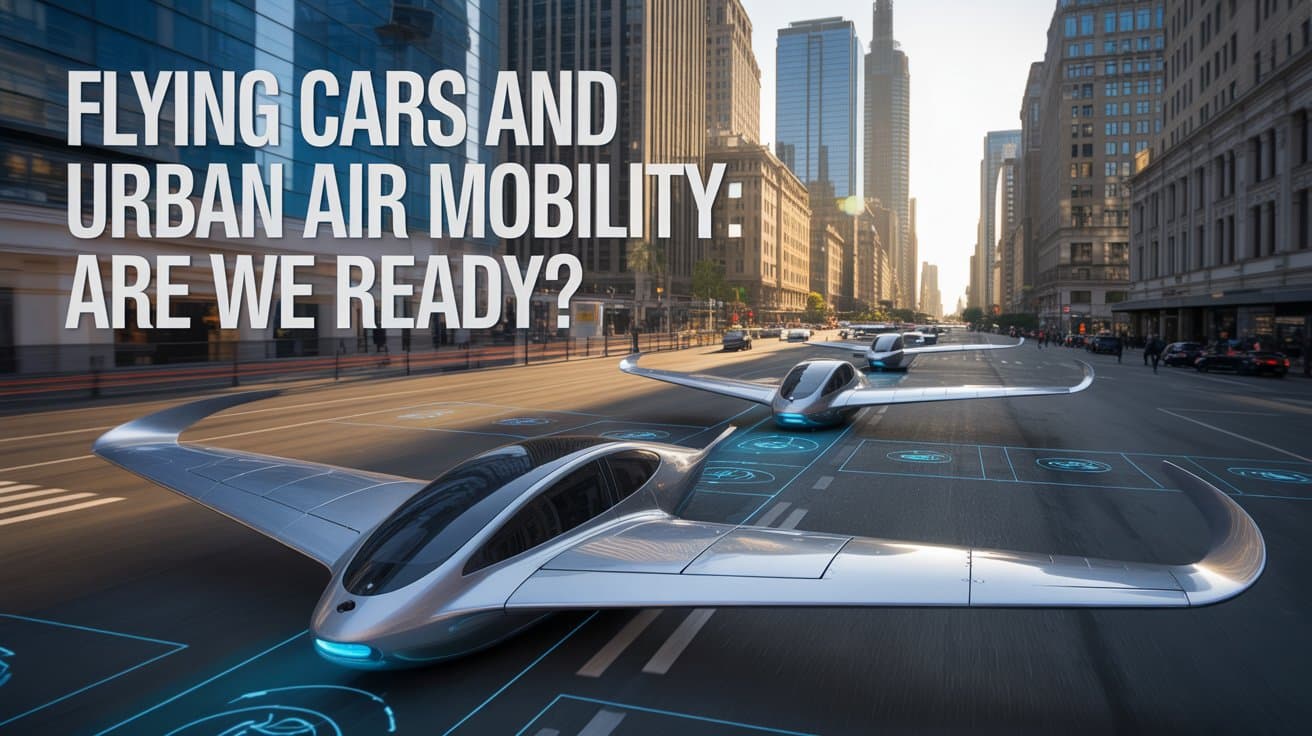
Look! Up in the sky! Not a bird … or a plane … it’s an eVTOL! An eVTOL (pronounced “ee-vee-tol”) is an electric vertical takeoff and landing aircraft, and thousands of them could be flying above cities by 2030. Hear from McKinsey experts and industry leaders as they explore the future of Advanced Air Mobility (AAM) and its potential impact on passengers, pilots, and the planet..In 1940, automaker Henry Ford said, “Mark my words: a combination aeroplane and motorcar is coming.” People once mocked Ford for his bold prediction, but today, the same technology that drives drones and self-driving cars is turning the idea of “flying cars” from science fiction into a real possibility in our cities.
What is Urban Air Mobility?
Urban Air Mobility (UAM) is a new way of moving people and goods through the skies above our cities. It uses small, electric, and mostly automated aircraft that can take off and land vertically, much like drones or helicopters, but quieter and cleaner. These flying vehicles are designed to zip across crowded cityscapes, connecting key locations in minutes instead of hours.
How Flying Cars Really Work?
Flying cars are a stunning blend of innovation and imagination, merging the freedom of flight with the convenience of everyday travel. Most of these futuristic vehicles use electric propulsion systems powered by multiple rotors or fans, allowing them to take off and land vertically (VTOL) right from driveways, rooftops, or small pads. With smart sensors, GPS, and AI-driven flight controls, they can automatically stabilise, navigate, and even make real-time decisions in the air, keeping passengers safe while delivering a smooth flying experience. There are even next-gen designs that have hybrid modes, allowing them to drive on city streets and then extend their wings and fly over the traffic. These flying cars have lightweight carbon fibre builds, are fast, energy-efficient, and agile enough to maneuver through urban airspace. A network of intelligent sensors constantly monitors the environment, responding to wind, avoiding collisions, and providing for a safe journey. Then, when they land, many can switch back to road mode and demonstrate that the future may include transportation that is not just on wheels but in the air above us.
Challenges Ahead
The Benefits and Promises
Flying vehicles and Urban Air Mobility (UAM) has many great benefits to modern cities. The primary goal of UAM is to reduce congestion and speed up travel by moving a portion of urban mobility from the road to the air. Electric vertical takeoff and landing vehicles (eVTOL) facilitate accessibility, which has the greatest impact in reaching neighbourhoods that are remote or difficult-to-connect with no or very limited road access (for example, rooftops). Environmentally, eVTOL is electric and has zero emissions while flying, which aids in improving the quality of urban air, using less ground-based infrastructure than traditional road improvements. Economically, UAM development creates jobs in manufacturing, development, fleet operations, and pilot or system training; it inspires other jobs in new products and services such as battery technologies and flight autonomy. In emergency situations, UAM shows potential to support faster response to emergencies, delivering medical supplies and disaster assessments, which may allow emergency teams to get to the scene quicker and improve situational awareness.
Are We Really Ready?
Flying cars and Urban Air Mobility might seem like something out of a science fiction movie, but are we really ready to see them every day? Technology is changing rapidly; we have prototypes that are already flying, but there are still a lot of real-world obstacles to prepare for. We need robust safety regulations, a clear certification and licensing system, certified operators, and low-altitude smart air-traffic control. Cities will also need to build vertiports, charging stations, and emergency landing areas before flying vehicles can be a part of everyday living. And with all of this technology, society will still need to feel safe, confident, and willing to accept flying as a new mode of transport above their neighbourhoods. So while the future is certainly closer, we’re still in a shift, curious, excited, and cautiously planning for a future that has flying vehicles as part of everyday urban travel.
The Journey Forward
In the coming years, flying cars may become a common feature in urban environments. They will be able to transport people through the air, bypassing traffic and getting them to their destination in minutes instead of hours. As technology evolves, these vehicles may become fully autonomous vehicles so that passengers can safely sit back and enjoy the ride in a manner similar to an air taxi. Cities may even go so far as to develop digital sky lanes to safely and effectively navigate aircraft through the airspace, much like they currently do for cars on the road. Given the cleaner electrification and smart navigational capabilities, Urban Air Mobility will produce fast, quiet, more environmentally friendly, and user-friendly travel, all while supporting the emergency services and delivery needs of the urban environment. If the development of Flying Cars continues to progress at the current rate, the sky may indeed become the next highway!
Wrapping Up
Rather than following a trend, flying car startups are leading the way to launch an entirely new era of transportation. As US and European companies are working hard on newer designs and technologies, the concept of flying cars is gradually becoming a part of our lives. This might enable people to travel at speedy rates, avoid congestion in traffic, and generally change the pattern of movement within cities. Of course, many challenges remain, but the progress seen so far gives reason to believe that exciting things can be expected from the future of air mobility. The dream of everyday air travel is getting closer to reality as more startups and large aviation companies join the movement. So, get ready-the next big journey might just take place in the sky!