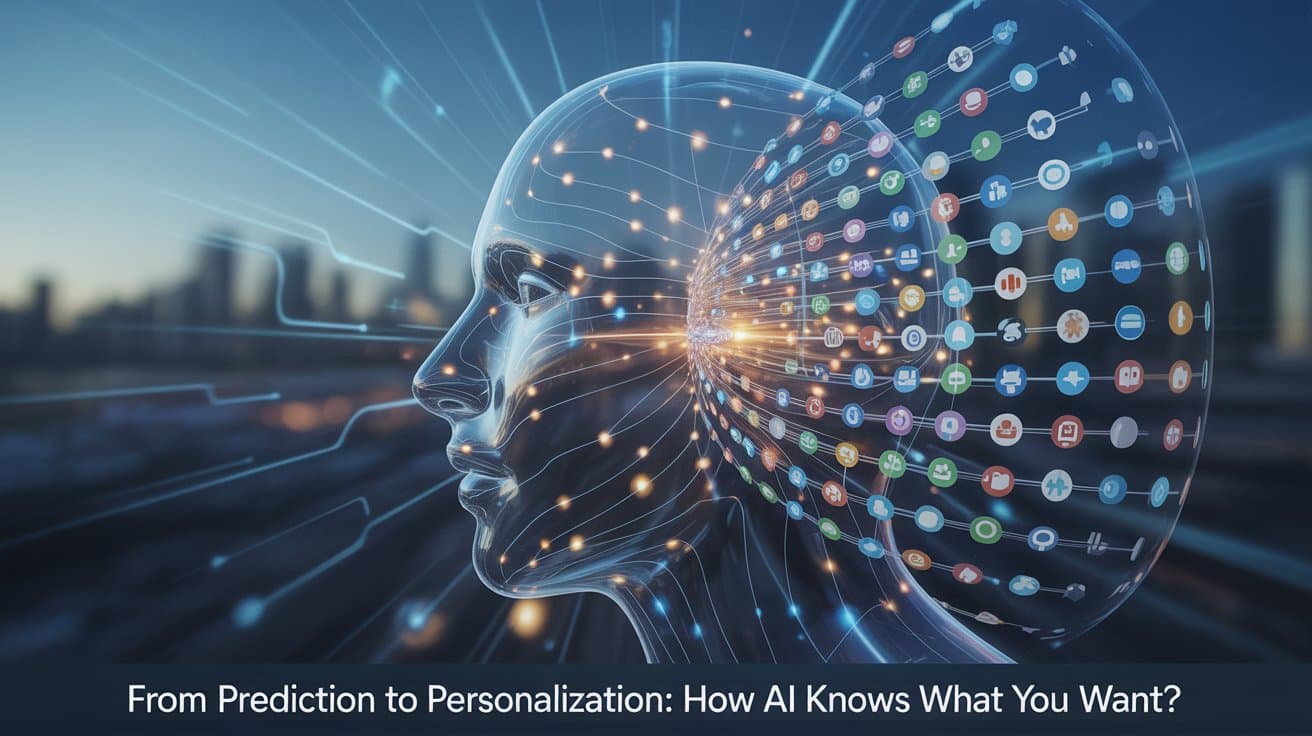
Have you ever wondered, "Hold on... how did my phone know I was in the mood for bubble tea?" Or questioned why your playlist always seems to know exactly what song you need, sometimes before you even know it? How does it always get it right? That's AI at work.
Whether it's suggesting the perfect lunch spot nearby or reminding you to book a cab just before your usual commute, artificial intelligence has become your quiet digital helper: always learning, predicting, and personalizing every click along your online journey. But how does it know what you want, sometimes before you do?
Let's peel back the layers as we discover how AI goes from prediction to delivering individually tailored experiences.
The use of artificial intelligence to customize recommendations and information according to a user's behaviors, interests, and interactions is known as AI-driven personalization. Through the analysis of extensive data, AI systems gain insights from individual users and provide tailored recommendations that cater specifically to them. In an era where consumers seek highly relevant content, businesses that excel in AI-driven personalization hold a competitive advantage.
Netflix's recommendation system, which accounts for over 80% of user viewing, uses AI to analyze viewing history, habits, and behavior patterns. Key factors include collaborative filtering, which recommends shows based on similar tastes, and content-based filtering, which matches user preferences with similar genres, actors, or directors. The algorithm also learns user habits, such as binge-watching and pause times, to refine its suggestions.
Amazon's recommendation engine, utilizing AI, is responsible for 35% of purchases. It uses item-to-item collaborative filtering and user behavior analysis to make relevant recommendations. This system compares items in a user's cart to similar products and tracks browsing and purchase patterns to understand preferences. This personalized shopping experience keeps users engaged and increases loyalty.
AI personalization uses customer data to create personalized experiences and recommendations, such as purchase history, social media engagement, and behavioral data. Marketers use AI to automate product or service recommendations, boosting sales. AI can also analyze user location, behavior, and values to improve personalization strategies. By continuously updating consumer profiles with predefined variables, marketers can tailor promotional advertising that is relatable and relevant, enhancing their marketing strategies and attracting potential leads.
The formula for good personalization is a mix of data, context, and flexibility. To start, AI systems must gather rich data from your browsing history and shopping history, your search terms, device type, and even location. But having raw data is not sufficient. AI also needs to know the context in which you are engaging: Is it day or night? Are you on your desktop or mobile? Are you a regular user or a one-off returner after many years? These subtle cues enable AI to continue refining its answers. Lastly, personalization is not an initial setup, it's a continuous process. What interests you today may not interest you tomorrow, which is why AI models are continually updated, learning from your most recent behavior to keep up with your changing tastes.
Ever felt like an app just gets you? That's AI-driven personalization at work; learning your habits, preferences, and timing, all behind the scenes, to serve you up just what you need, when you need it. For companies, it's a way to end the guessing game and begin the real connection. And for you? Less searching, more discovering. So the next time your playlist finds the ideal groove or your shopping app displays the exact thing, don't think it's an accident. It's intelligent tech, operating in the background specifically for you.