


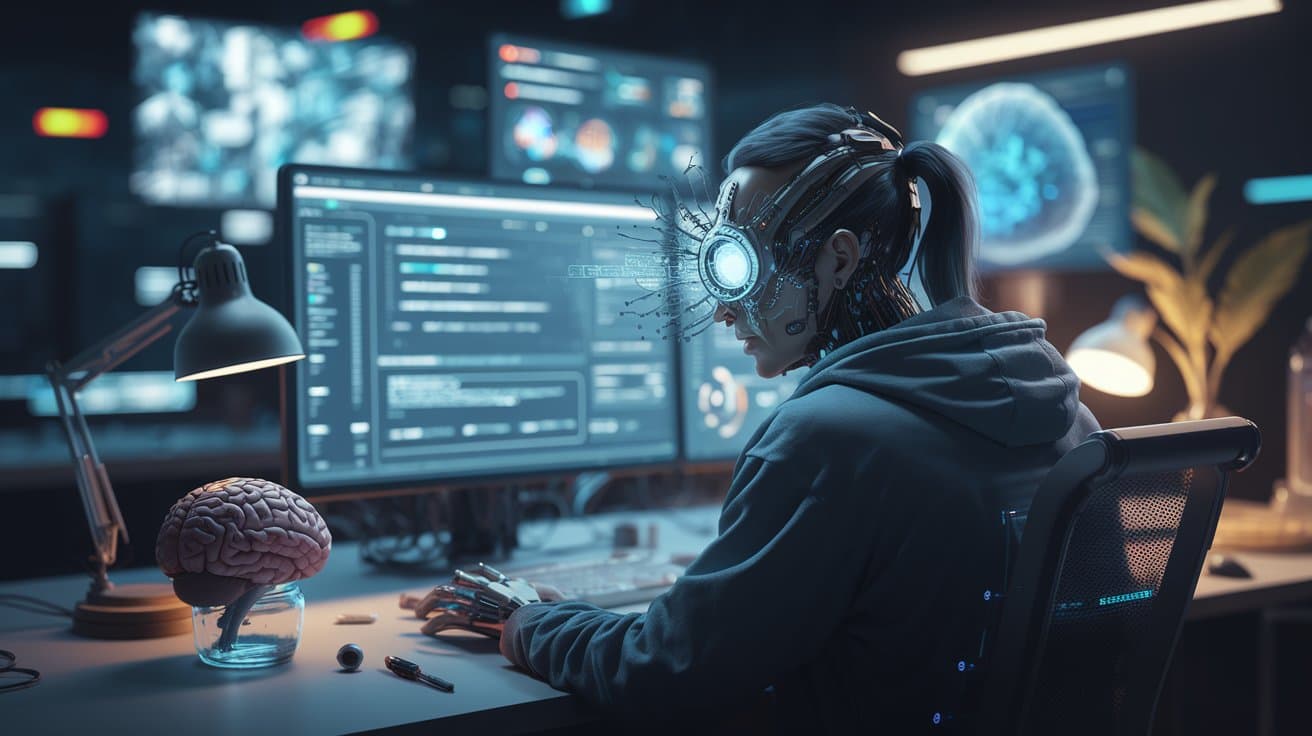
In the realm of cybercrime, hackers have always been ahead of the game, hacking passwords, breaking through firewalls, and taking advantage of system loopholes. But what if the next major target isn't your computer, smartphone, or even your bank account? What if it's your brain?
With the advances in neuroscience and Brain-Machine Interface (BMI) technology, the gap between human thoughts and digital systems is narrowing. These technologies here open up immense avenues for medicine, communication, and even productivity, but they also introduce new threats. Do you think the future of hacking will be the direct manipulation of thoughts, memories, and decisions? Have you ever thought of a world where your brain got hacked? Let's dive into the blog.
Know About Brain Hacking
The use of technologies and/or tools to alter a person's mental state, cognitive functions, or degree of function is known as brain hacking. An organization may consciously implement such efforts as part of employee wellness and productivity programs, or the individual may do so as a tool for personal growth. Brain hacking is a personal development strategy that aims to maximize happiness and efficacy while improving cognitive performance. Meditation, metacognitive therapy, attention training, and memory training are brain-centered strategies for achieving this goal.
External parties like product designers and marketers also utilize brain hacking to change people's behavior. Another form of brain hacking is social engineering, which makes use of personal weaknesses to carry out security breaches. Brain hacking is sometimes called Brain Hijacking when the goal is to change the target's behavior without their knowledge or agreement.
The Rise of Brain-Computer Interfaces (BCIs)
BCIs enable direct communication between the brain and outside devices. Created for medical use—e.g., to enable paralyzed patients to control prosthetics or computers—these interfaces are now moving into consumer technology. In the case of BCIs, artificial intelligence and deep learning applications provide the interface between the brain and the computer, enabling the recognition of basic movements, which include complex movements such as speech, based on their decoding challenges. Various companies like Neuralink, Meta, and OpenBCI are competing to bring BCIs into the mainstream for gaming, communication, and cognitive enhancement.
How Cybercriminals Could Exploit The Human Brain?
- Brain Data Theft: Just as a hacker steals users' passwords and credit card credentials, hackers may steal personal thoughts, memories, and intellectual property from these BCI systems. Imagine a future where a hacker gets into an executive mind rather than infiltrating a locked server.
- Neuro-Phishing & Behavioral Manipulation: Traditional phishing forms usually trick users into clicking on a malware link, but now we wonder if hackers could implant false sentiments or thoughts that would entice someone into spilling confidential information. Cybercriminals could effectively use BCIs to manipulate trust, perception, or even emotion and bypass all forms of social engineering attacks.
- Brain-Ransomware: Ransomware is a virus that blocks sensitive electronic files until payment is made. Now think of a hacker who took control of brain activity, denying access to one's memories or muscle control until payment is made. This sounds like science fiction, but with brain implants and cloud storage over brain data, it becomes a reality.
- Deepfake Thoughts & False Memories: There is already a problem with deepfake videos and AI-generated disinformation. But let's say cybercriminals can implant false memories and modify existing ones. This can be much more serious in cases such as legal trials, political manipulation, or identification crises.
How to Protect Oneself From Brain Hacking?
- Create and fortify legal safeguards for brain data. For instance, brain data is already covered by the General Data Protection Regulation (GDPR).
- Strictly prohibit neurotech companies from transferring or trafficking brain data to outside parties.
- Ensure neurotechnological equipment only uses the information necessary to complete the activities at hand.
- Increase our understanding of the value of cybersecurity as consumers and citizens by demanding the highest level of protection and zero vulnerabilities from the providers.
Final Thoughts: Are We Ready For The Brain-Hacking Era?
BCI technology may promise great benefits, but it also brings horrifying vulnerabilities. The question is not whether hackers will attack human brains but rather when and how prepared we shall be.
As we get into this new frontier, one thing is certain: Cybersecurity is no longer merely about protecting devices; it is about protecting minds.
How do you feel? Would you trust a brain-computer interface with your mind, or does the risk outweigh the rewards?