


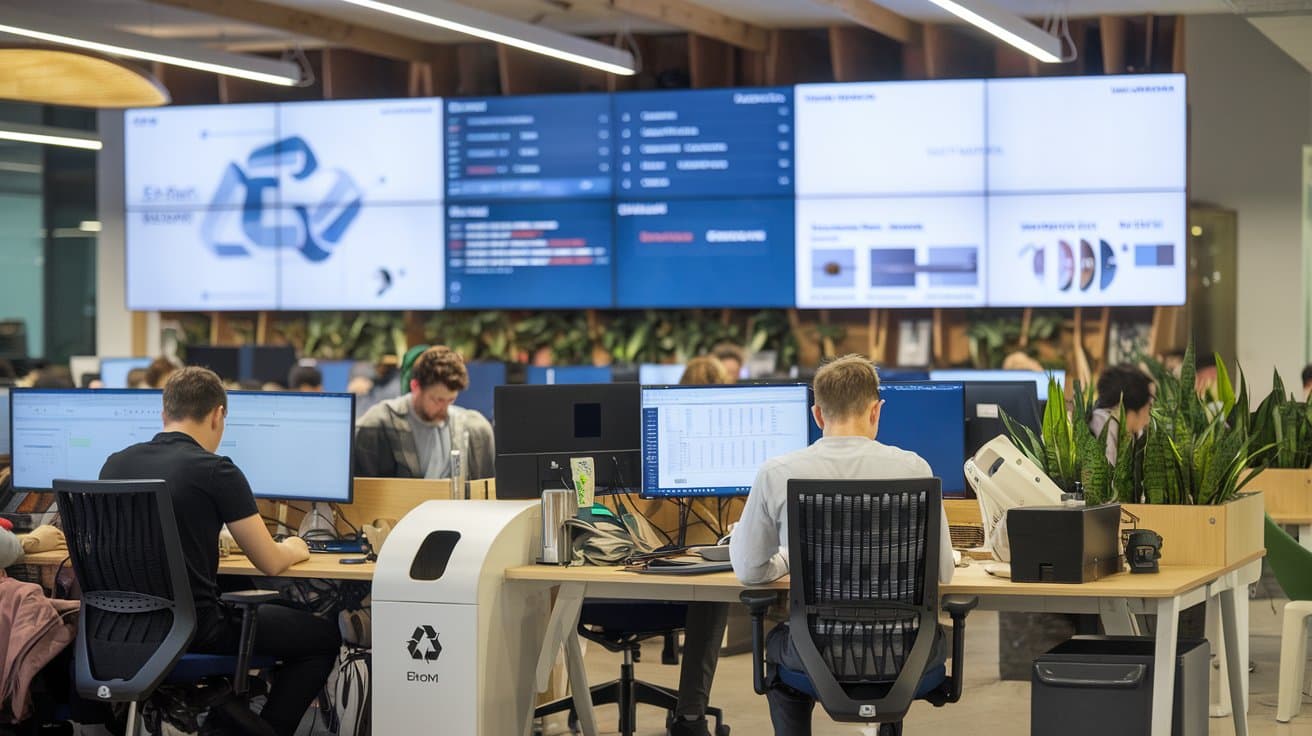
We live in a world led by technology in every field. From Cloud Computing to AI, technological innovations are entering mainstream life-shaping industries and improving the standard of living.
But do you know the environmental cost of this kind of progress?
IT is under pressure to adopt sustainable practices because of increasing energy demands, e-waste, and carbon emissions. A massive question hangs in the air: can the same industry driving digital transformation also drive environmental change? We will explore how IT firms are tackling their ecological footprint and paving the way for a more
sustainable future.
What is Sustainability?
The term "sustainability" describes the prudent use of resources to satisfy current demands without endangering the capacity of future generations to satisfy their own. In the context of information technology, it refers to the application of tactics, tools, and procedures that minimize the environmental impact of IT operations while promoting business goals.
What is Sustainable IT?
Sustainable IT is an approach that is incorporated into Information technology that aims to reduce the environmental impact of IT operations and their role in climate change. Sustainable IT, also referred to as green IT, is the process of identifying environmentally beneficial methods for the design, production, usage, and disposal of IT equipment, including servers, laptop and desktop computers, and related systems. Find chances to lower carbon emissions and improve energy efficiency, also entails comprehending the effects of the entire IT operation. Their objective is to maintain general functionality, find possible cost reductions, and optimize IT infrastructure for increased sustainability.
Why Sustainability is Important in IT?
Since IT has an enormous impact on the environment, accounting for 2-3% of greenhouse gas emissions and also responsible for more than 50 million tons of e-waste every year, sustainability in IT becomes necessary. With the increased usage of technology, sustainability becomes the need of the hour to reduce this footprint. Energy-efficient data centers, renewable energy programs, and recycling help combat such issues at the same time reducing operational costs. It also helps to sustain alignment with consumer expectations and regulatory demands complementing brand reputation and competitiveness. Sustainability further supports global climate goals, such as the Paris Agreement limits of 1.5°C, creates innovations in terms of solution offerings such as AI-enabled energy management and biodegradable electronics, and safeguards business viability in the long-term, indirectly guaranteeing resource conservation while decreasing risks. The future of technology depends on its ability to be both transformative and sustainable.
How Can We Implement Sustainability in IT?
- Sustainable IT employees: Developing a culture of sustainability within the company can improve the sustainability goals of the organization. Companies can take green initiatives, and offer training programs to educate employees, also companies can bring incentives for making the organization sustainable.
- E-waste management and recycling programs: The rapid growth of technological innovation has created huge electronic waste. The devices that were disposed of finally ended up in landfills which release toxic materials into the environment. To reduce this IT firms encourage hardware reuse, implementing take-back schemes so that consumers can return their old electronics for recycling, making modular and repairable products to increase the lifecycle of devices.
- Adoption of renewable energy: Tech companies are among the biggest investors in renewable energy. Companies like Apple, Amazon, and Microsoft have shown notable leaps forward in powering their operation with clean sources. Apple is going as far as running all its global corporate operations on 100% renewable energy and asks its suppliers to do the same. Microsoft intends to be carbon-negative by 2030 and invests in innovative carbon removal technologies.
- Sustainable software development: Development of efficient algorithms with low energy consumption, sustainable coding that reduces computational overhead, and lowering software's energy usage when it runs on mobiles or any device with low power.
- Carbon offsetting and sustainable pledge: Direct action aside, many IT firms are investing in carbon offsetting programs. This includes funding projects to neutralize their carbon emissions using reforestation, developing renewable energy, and carbon capture technology.
- Life cycle management strategy: A successful lifecycle management approach takes into account the entire IT ecosystem, including hardware, software, and software as a service. IT asset management and IT asset disposal are also necessary. To put it briefly, how will IT executives oversee their technology when it is in use? And how can the company properly get rid of the technology when it's time to retire it? By providing answers to these questions, companies may prolong the lifecycle of their technology and make sure that every product improves a certain aspect of their operations.
Final Thoughts: IT For a Sustainable Future
It is a must for businesses to become sustainable if they want to survive in the environmentally conscious world. IT firms adopting renewable energy practices can reduce environmental impact and make it sustainable while boosting their operational efficiency. The approach toward the sustainable IT system is a win for both the earth and the bottom lines. Continued engagement and cooperation can drive the tech industry to become one of the leaders in the greener future.