


The pace of technological advancement has been nothing but phenomenal in the last few decades. It has reshaped industries, redefined societies, and changed the way we live, work, and interact with each other. As we look towards 2030, the question remains: what are the world's next breakthrough innovations? Over the coming years, there will come a wave of technologies capable of revolutionizing the world. let’s investigate new trends, visionary ideas, and breakthroughs in cutting-edge sectors that will shape the future, provoke, and inevitably cause deep transformations in how we confront problems and take advantage of opportunities in an increasingly connected world.
What Are Some Top Technology Trends that Come Up in The Next 5 Years?
- Quantum Computing: Quantum computing is a newly established field of cutting-edge computer science, that can use properties of quantum physics to perform calculations that no classical computers, not even the strongest, can accomplish. It relies on completely peculiar mechanical principles of quantum physics which will surely lift the impending limitation. But by 2030, we will see potential outcomes when quantum processors will perform calculations on topics as daunting as modeling solutions for the atmosphere, discovering new drugs, or secure communication, at rates unimaginable today. Inevitably, as gradually made available, these machines will make possible the imaginary.
- Hyper Personalized Healthcare: The hyper-personalized medicine market is likely to grow at a compound annual growth rate of 11.7% from 2022 to 2031, which will amount to $5.9 trillion. Hyper-personalized medicine refers to the treatment of a patient with his or her specific characteristics. The scientific discoveries that led to our better understanding of the reasons why a person's unique genetic and molecular makeup contributes to a particular disease form the basis of the method. In 2030, health care will be driven by more advanced technologies like gene editing, personalized medicine, and wearable tech. It will monitor your health constantly, alerting you to issues before they become symptoms. The application of CRISPR technology might make it possible to treat genetic disorders with pinpoint accuracy, and AI-driven diagnostic tools will ensure that many diseases are detected at the earliest possible stage and death is averted for countless lives.
- Green Tech Revolution: Green Tech Revolution: With sustainability as its frontier, interest in green technology will break the advancements. Significant developments will emerge in the fields of renewable energy storage, ultra-efficient batteries, and fusion energy, which promises virtually unlimited clean power. Technologies like carbon capture and bioplastics will lessen climate change and curtail waste. It is expected that the value of green frontier technologies will henceforth increase tremendously, rising four-fold from its current valuation, and reach a market size of $2.1 trillion by 2030. Furthermore, the industry within the frontiers is also going to grow wider with an expected rise to a valuation that reaches a staggering $9.5 trillion before the end of the decade.
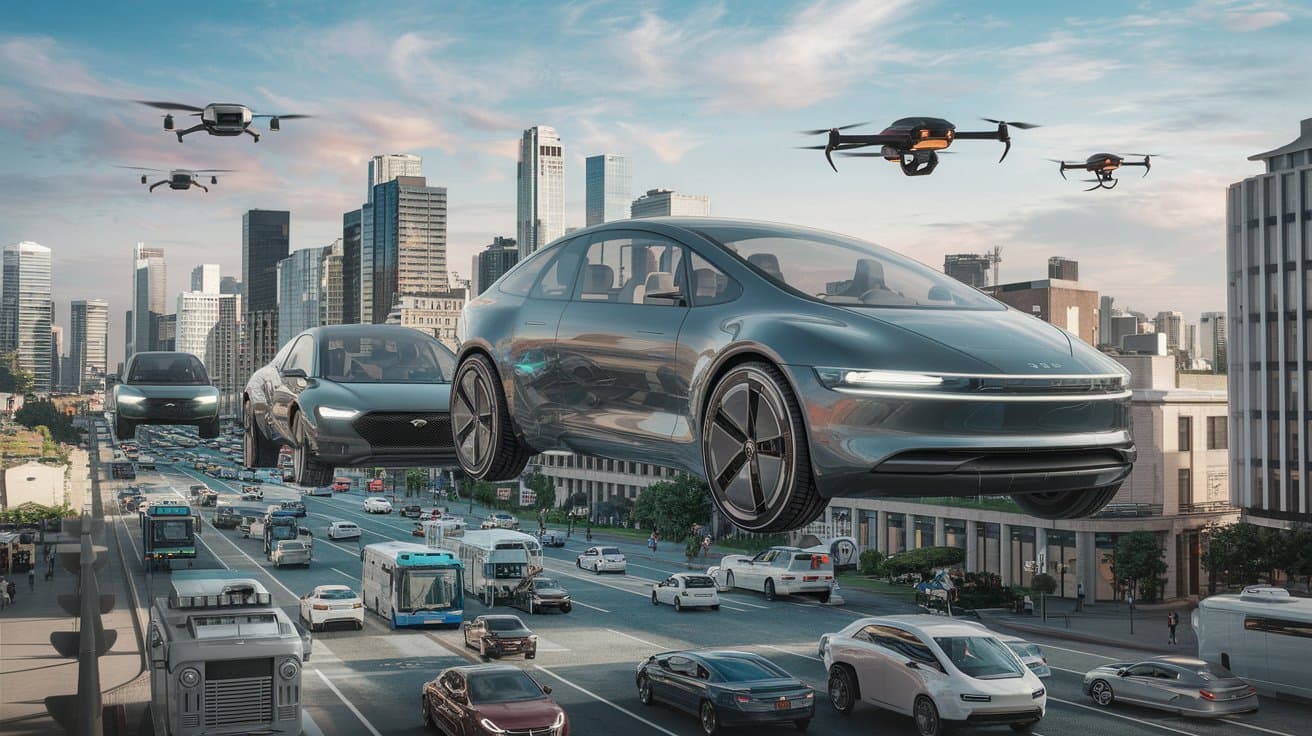
- Autonomous vehicles: An autonomous vehicle is a type of vehicle that navigates and functions without any human assistance. Drones and self-driving cars are among these. These vehicles can view their surroundings, make judgments, and control their movements with the use of sensors and advanced technologies. The capacities of these vehicles are developing with the ongoing advancements in artificial intelligence, machine learning, and sensor technology. These technologies are essential for improving autonomous systems' perception, judgment, and general safety. The size of the global market for autonomous vehicles was estimated at USD 1,500.3 billion in 2022 and is expected to increase at a compound annual growth rate (CAGR) of 32.3% from USD 1,921.1 billion in 2023 to USD 13,632.4 billion by 2030. The Asia-Pacific region accounted for 50.44% of the market share in the autonomous vehicle sector in 2022.
- Digital Twins: A digital replica of a real physical product, process, ecosystem, or object is called a digital twin. We can test changes and modifications in the digital twins which is too costly or dangerous to test on the actual physical thing. Digital twins are most likely to be everywhere in 2030. Everyone will use them at home and work, and nearly every technical item will be supplied with them. There will be special marketplaces where they can be bought and sold. They will ensure factories and machines are operating optimally - by sustainability, productivity, or cost. They will also mature as a trusted benchmark for solutions, certification, and testing.
- Brain-Computer Interface: A device that depends on your brain activity for detecting functional intent wanting to move, change, control, or interact with anything in your environment is called the brain-computer interface or BCI. In simple words, brain-computer interfaces (BCIs) empower you to control a gadget or application using only your brain. A recent report estimates the global brain-computer interface (BCI) market was $1.74 billion in 2022 and is expected to rise to $6.2 billion by 2030, growing at a compound annual growth rate of 17.5%.
- Instant Multimodal Avatars: Real-time multimodal AI avatars are digital representatives of AI that can talk and interact with users at the same time through several modalities. The avatars promise to bring users a completely immersive experience as they can combine text with speech, facial expressions, and even gestures to make it very different from traditional chatbots which are almost plain texts or voice inputs only. The AI avatars market is rapidly growing with organizations and individuals looking for innovative ways to connect with consumers and customers. These hyper-realistic virtual avatars are changing the marketing, entertainment, and customer service sectors, providing personalized and immersive experiences. Huge money is being spent on digital human avatars to facilitate consumer engagement, build brand image, and quicken the time taken for communication. The global digital human (AI) avatar market is expected to grow at a compound annual growth rate (CAGR) of 46.59% from 2024 to 2031 to garner USD 454.75 billion.
How It Will Mold The Future Generation?
Innovations in 2030 will inevitably push future generations into a world that is sustainable and highly interconnected. Emerging technologies will make education much more personalized and immersive as the youth are prepared to become creative and critical thinkers to succeed in a highly competitive job market. Health innovations, green technologies, and advanced connectivity will interconnect communities for inclusive collaboration and unite the world. These developments will thus enable generations to come to pursue complex challenges, embrace diversity, and build a sustainable, equitable future in which technology operates on behalf of progress and the greater good.