


Go ahead and open your favorite application right now. Notice anything? Is it clean, or is it cluttered? Do the buttons guide you, or do you find yourself scouring for what to click on? Does it feel modern - or does it feel like it is from 2015?
If you had to think twice, that’s proof of how fast UI can change. What may have looked amazing, cutting-edge, and impressive a few years ago may feel bulky today. The truth is, user expectations change faster than design teams realize. So, what will be the vision for interfaces in 2025? Let’s dive in!
What’s In?
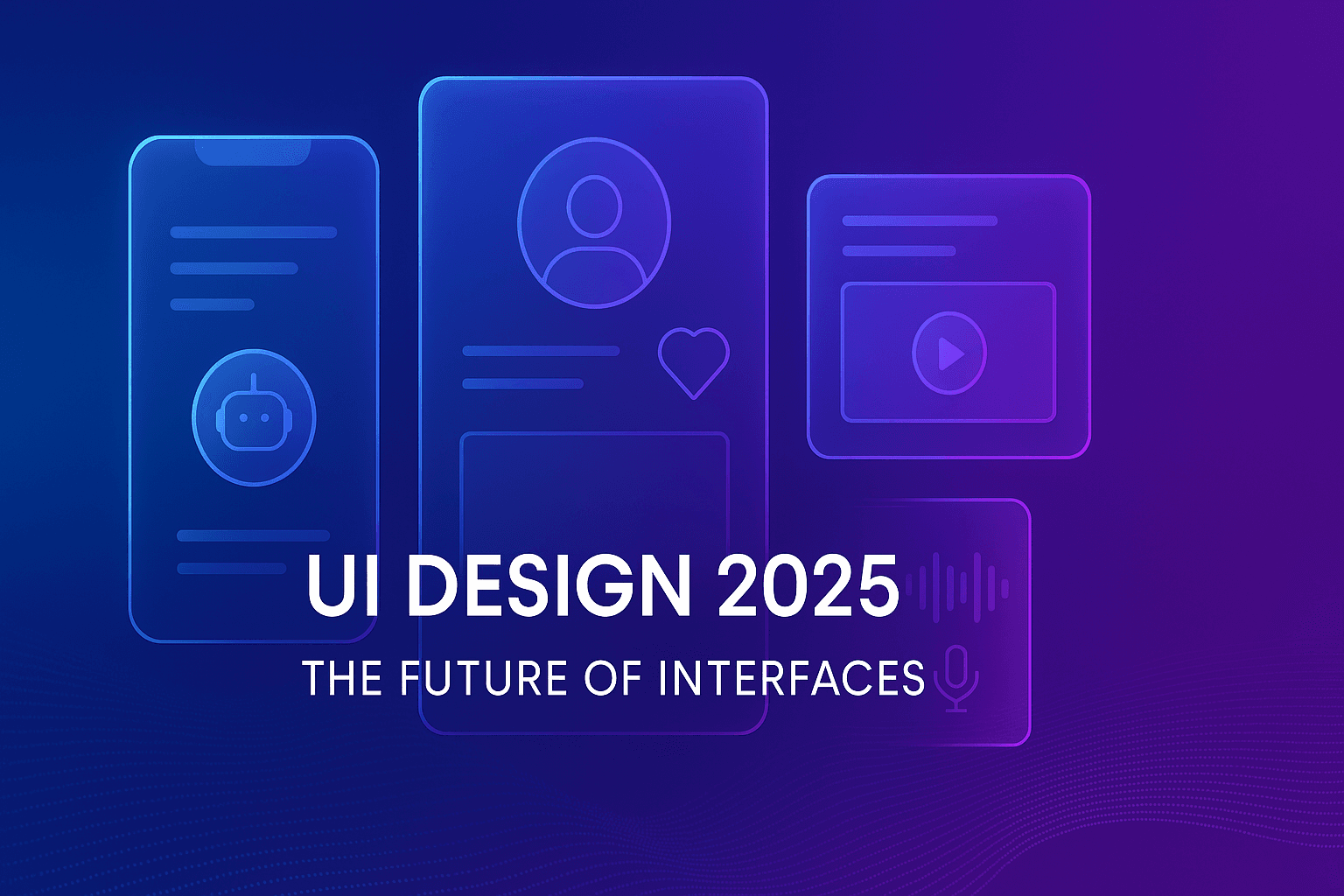
- Minimalism with Depth: Minimalism isn't new, but the latest wave in minimalism brings depth and richness to simplicity. Dark themes, soft shadows, gradients, glassmorphism, and layered elements all provide depth without adding clutter. This design language allows for variation while maintaining clean, balanced, and dynamic forms. By understanding this form of visual language, a user can still make connections while feeling visually invested, but still focused on the interaction.
- Personalization-First UI: Users don't want baseless experiences. Today’s interfaces are smarter than ever, adjusting layouts, content, and even colors to match user behavior and preferences. Music apps now offer playlist recommendations based on mood and time of day, rather than just genre. E-commerce sites now adjust their product displays based on user browsing history. The future of the UI isn't fixed. It's fluid.
- AI-Integrated Interfaces: AI is no longer working behind the scenes; it's defining interfaces. Predictive search, AI-powered chat assistants, adaptive dashboards, and personalized suggestions are becoming minimum requirements. Voice-first UIs, image recognition powered by AI, and intelligent layouts are dissolving the distinction between static design and smart experience. The future UI doesn't merely look great; it thinks along with you.
- Inclusive & Accessible Design: Accessibility has become an absolute requirement rather than a nice-to-have. UIs nowadays support a range of users, either through high-contrast modes, dyslexia fonts, screen reader facilities, or colour palettes which are suitable for colour blindness. This not only increases reach but also signals brand social responsibility. Design for all is the new standard.
- Zero UI: As user interfaces grow more intuitive, the "invisible" or Zero-UI movement emphasizes voice and gesture-based commands that minimize visible interface elements, resulting in a more seamless experience, particularly in augmented reality and wearable technology. People are choosing technology that is naturally incorporated into daily life. As customers want to spend more time away from phones, computers, tablets, and other gadgets, screenless functionality is growing.
- Emotionally Intelligent Design: Emotional Intelligence Design is about designing interfaces that transcend functionality to react to user feelings empathetically. Rather than harsh error messages or mechanistic affirmations, emotionally intelligent UIs comfort, celebrate small victories, and alleviate stress through considerate tone, responsive flows, and soothing interactions. By making empathy and accessibility priorities, this design establishes trust, relieves frustration, and makes digital experiences more human.
The Bottom Line
The future of UI isn't simply about appearing elegant; it is about creating experiences that are intuitive, adaptive, inclusive, and emotionally intelligent. The next evolution of trends shows us everything from invisible interfaces to AI-driven intelligence and emotion-driven design; the future of UI is aligning itself closer to the ways we think, feel, and interact as people.
We at Aventus are consciously adapting to these trends, embedding personalization, accessibility, and emotionally intelligent design into our solutions to create interfaces that are functional and human-centered.
As we navigate to 2025 and beyond, the best interfaces won't just perform functional needs. They will provide anticipatory information for emotions, reduce friction, and feel like another everyday extension. In this process, design isn't about pixels on a screen anymore; it's about creating digital experiences that are seamless, human, and timeless.