

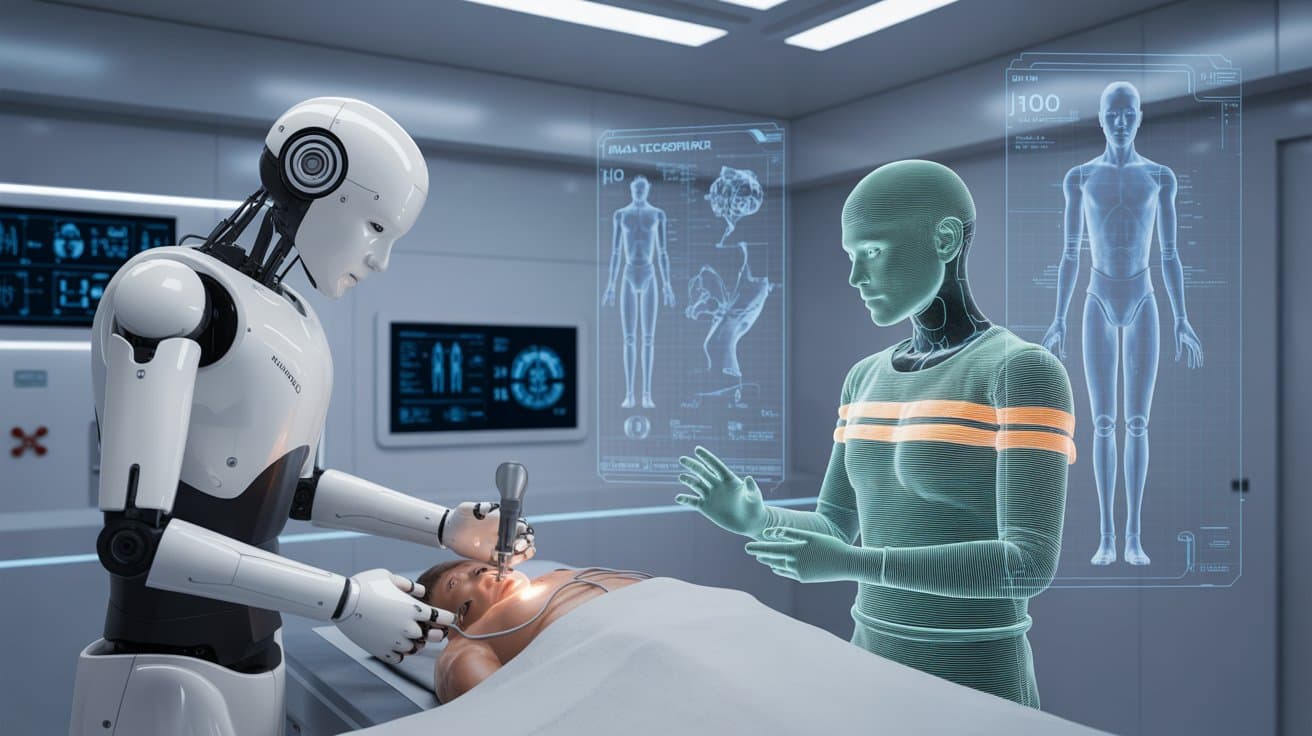
Medical care is changing faster than we ever imagined, all thanks to AI and robotics. Think about it: technologies we once saw only in sci-fi movies are now in hospitals, helping doctors spot diseases earlier than ever, perform highly complex surgeries with incredible precision, and even support patients in recovering faster. But here’s something many people get wrong:
Are AI doctors and robot surgeons replacing humans?
Not at all.
Instead, they’re becoming powerful partners. AI sharpens diagnosis. Robots enhance surgical accuracy. And together, they’re helping human doctors do what they do best, but with greater speed, safety, and confidence.
So the real question is:
Are we ready to see healthcare transform right in front of us in the coming days?
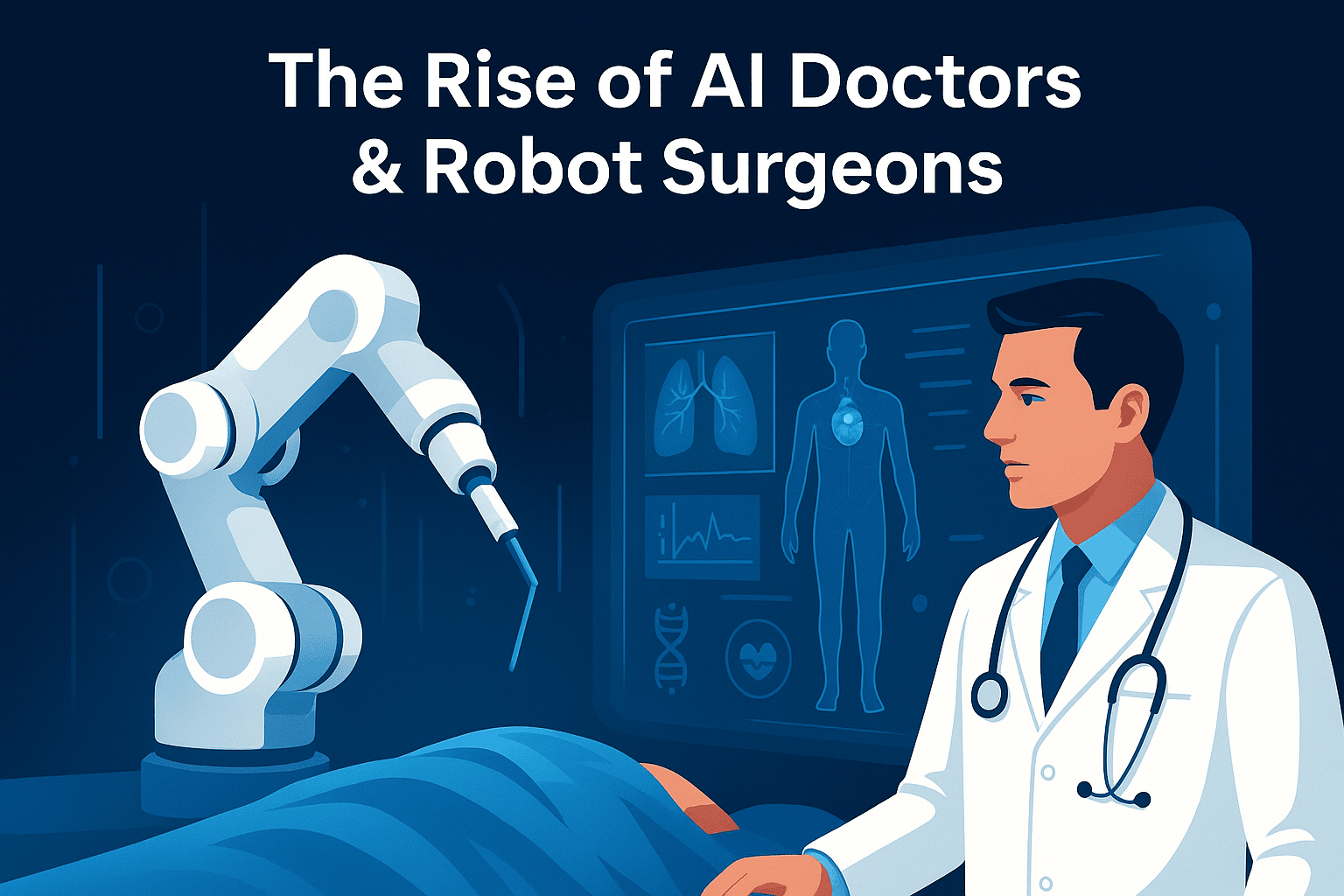
Training Tomorrow’s Surgeons in Virtual Operating Theatres
AI is dramatically changing how surgical education is delivered with high-tech virtual simulators that enable students to perform difficult operations in lifelike, safe settings. New surgeons do not have to use dead bodies or live patients for training as they can now practice on interactive, AI-powered platforms that monitor their skills and give them immediate, personalized comments regarding precision, time, and choices.
Those systems are essential ways to carry out sustained, deliberate practice, thus they allow the learners to go through the procedures as many times as they want until they become proficient. AI might be able to create such exact virtual copies of a real patient that the surgeons will be able to practice on the digital twin of the patient they have never met in the near future. Hence, this is not just a confidence booster but also a great risk reduction in terms of errors.
Much like Formula One drivers who spend most of their preparation time in simulators, tomorrow’s surgeons will rely on virtual operating theatres to refine their skills, test new techniques, and stay prepared for rare or high-risk cases all while keeping real patients safe.
AI-Powered Diagnosis and Treatment
Artificial intelligence (AI) systems can evaluate enormous amounts of medical data including X-rays, MRIs, blood tests, and patient records in a matter of seconds. These systems get training to recognize patterns that may be hard for humans to detect visually. To illustrate, AI instruments can locate the initial traces of cancer, cardiovascular ailments, or brain diseases, in most cases, they are quicker and more accurate than the conventional ways.
In addition, virtual AI “doctors” or health assistants can monitor vital signs, answer patient questions, recommend lifestyle changes, and even schedule appointments. This not only saves time for medical staff but also makes healthcare more accessible to people in remote or underserved areas.
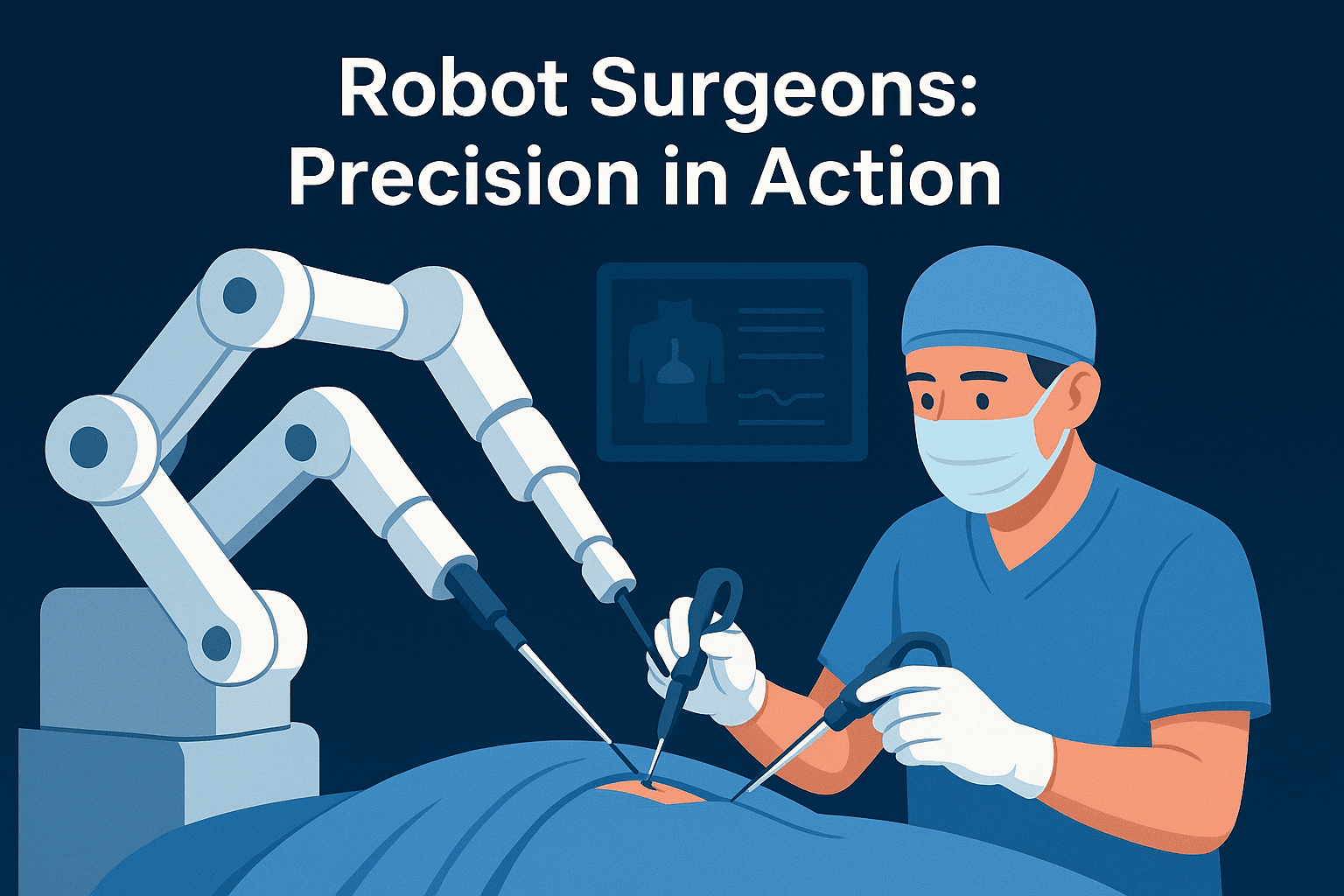
Robot Surgeons: Precision in Action
Another significant breakthrough is robotic-assisted surgery. Under the control of a proficient surgeon, robots can perform exact movements to the extreme during a complicated operation. Also, the robotic limbs can work in small areas and eliminate the possibility of shaking by humans, thus making the incisions smaller, lessening the pain, decreasing the blood loss, and increasing the recovery speed of the patients.
Surgeries such as heart surgery, joint replacement, and even delicate brain procedures are now being performed with the support of robotic systems. These robots do not make decisions independently; instead, they act as advanced tools that enhance a surgeon’s control and accuracy.
Benefits to the Healthcare System
Using AI and robotics in the medical field is a big win in a lot of ways. These technologies make diagnoses more accurate and the occurrence of errors less likely. Moreover, they can speed up a wide range of medical processes, from imaging analysis to even assisting in surgeries. Over time, the innovative means contribute to cost reduction in the health sector as they are able to enhance the patient flow and lessen the number of complications.
What is more, AI technologies are designed in such a way that they constantly learn from fresh datasets, thereby becoming more effective and efficient healthcare solutions over time.
Challenges and Ethical Considerations
Nevertheless, the increased use of AI in healthcare creates a few concerns alongside numerous benefits. One of major problems is that of privacy of patient data, AI systems use personal and sensitive medical information extensively. Therefore, there must be strong security provisions and strict regulations in order to safeguard this data from any kind of breaches.
Moreover, the issues of ethics, especially those of responsibility and trust, arise in the same context. For example, if an AI system is responsible for a wrong diagnosis or a robot-assisted surgery is unsuccessful, then the issue of which person is accountable for the mistake becomes extremely difficult and critical. These difficulties, to which human decisions and supervision as well as transparent regulations are the solutions, feature prominently.
Preparing For An AI-Driven Future
The merging of AI with surgical robotics is not just a progression of technology; it is a radical change of how health care systems worldwide could potentially operate. The technology is aimed at making top-quality surgery available to more people, lessening the differences in care quality due to location, and solving the problem of a shortage of surgeons, which restricts access to healthcare in many areas, by increasing the supply of surgeons.
Success will depend on a careful balance between human expertise and artificial intelligence, ensuring that technology enhances, rather than replaces, the medical judgment and compassion at the heart of quality healthcare. The purpose should be to make surgical excellence available to all without compromising patient safety and the quality of care at the highest level.
The future of surgery is being shaped not only in medical journals but also in the code of AI systems, which learn from every procedure to deliver better outcomes for patients everywhere.
Conclusion
AI doctors and robot surgeons are some of the most radical innovations in healthcare of the modern era. It is true that issues like privacy, regulation, and ethics have to be sorted out properly, but the pros such as accuracy, speed, and availability cannot be denied. It is not a question of either humans or machines but a combination of human knowledge and smart tech will shape the medical field tomorrow. When used wisely, AI becomes a powerful tool that hospitals and clinics can leverage to speed up diagnostics, enhance surgical safety, and improve patient recovery.