


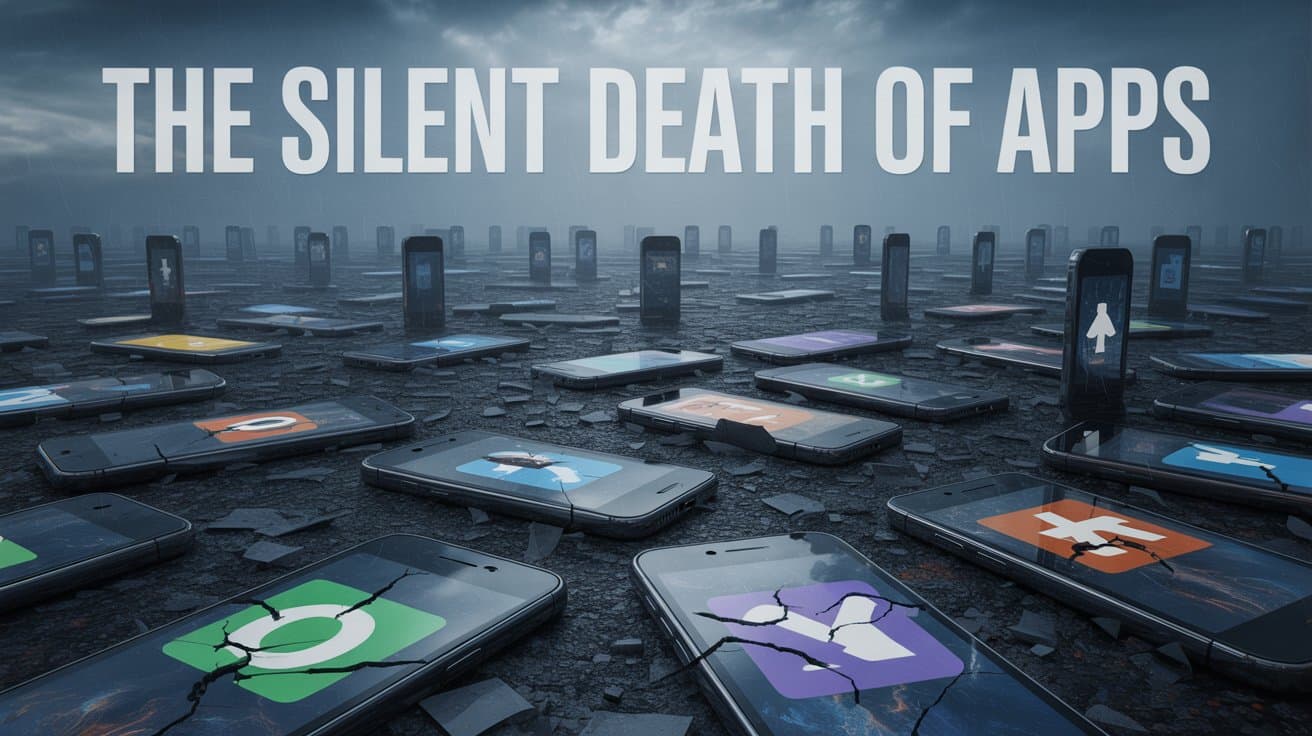
A short story from 2026
Maya didn’t expect anything unusual when she tapped an old app on her phone.
But instead of opening, a message appeared:
“This is a legacy interface. Do you want to continue?”
“Legacy? It’s just my cab app,” she said.
A small glowing assistant appeared on her screen.
“I can book your cab instantly,” it said.
“You don’t need to open old apps anymore.”
That’s when Maya realized:
she couldn’t remember the last time she had actually used an app.
Apps Are Becoming Memories
Later, Maya told her friends.
They burst out laughing.
“You opened an app? Who does that in 2030?” one of them joked.
And they were right.
People no longer wanted icons, taps, menus, or waiting.
They just wanted things done.
“Order this.”
“Book that.”
“Plan something.”
And the AI handled everything quietly in the background.
The Home Screen Is Disappearing
That night, Maya checked her phone again.
Most of her apps were gone, replaced by one simple bar where she could type or speak.
No folders.
No grids.
Just one space for commands.
Out of habit, she tapped her old notes app.
It didn’t open.
The assistant simply said:
“Your notes are already stored. Just ask.”
Apps weren’t deleted.
They had simply become unnecessary.
A New Normal
The next morning, she accepted the new world.
“Book a cab,” she said.
And instantly, without any app opening, her cab was booked.
She didn’t miss the app.
She missed the era.
But things had changed.
Not because AI won,
but because people stopped wanting extra steps.
Apps Didn’t Die Suddenly, We Outgrew Them
There was no dramatic ending.
No final announcement.
Apps just faded as life became simpler.
One assistant now runs everything.
The home screen is almost empty.
And Maya finally understood:
Apps didn’t disappear.
We simply moved on.
What do you think? is this the future of our phones? We’d love to hear your thoughts.