

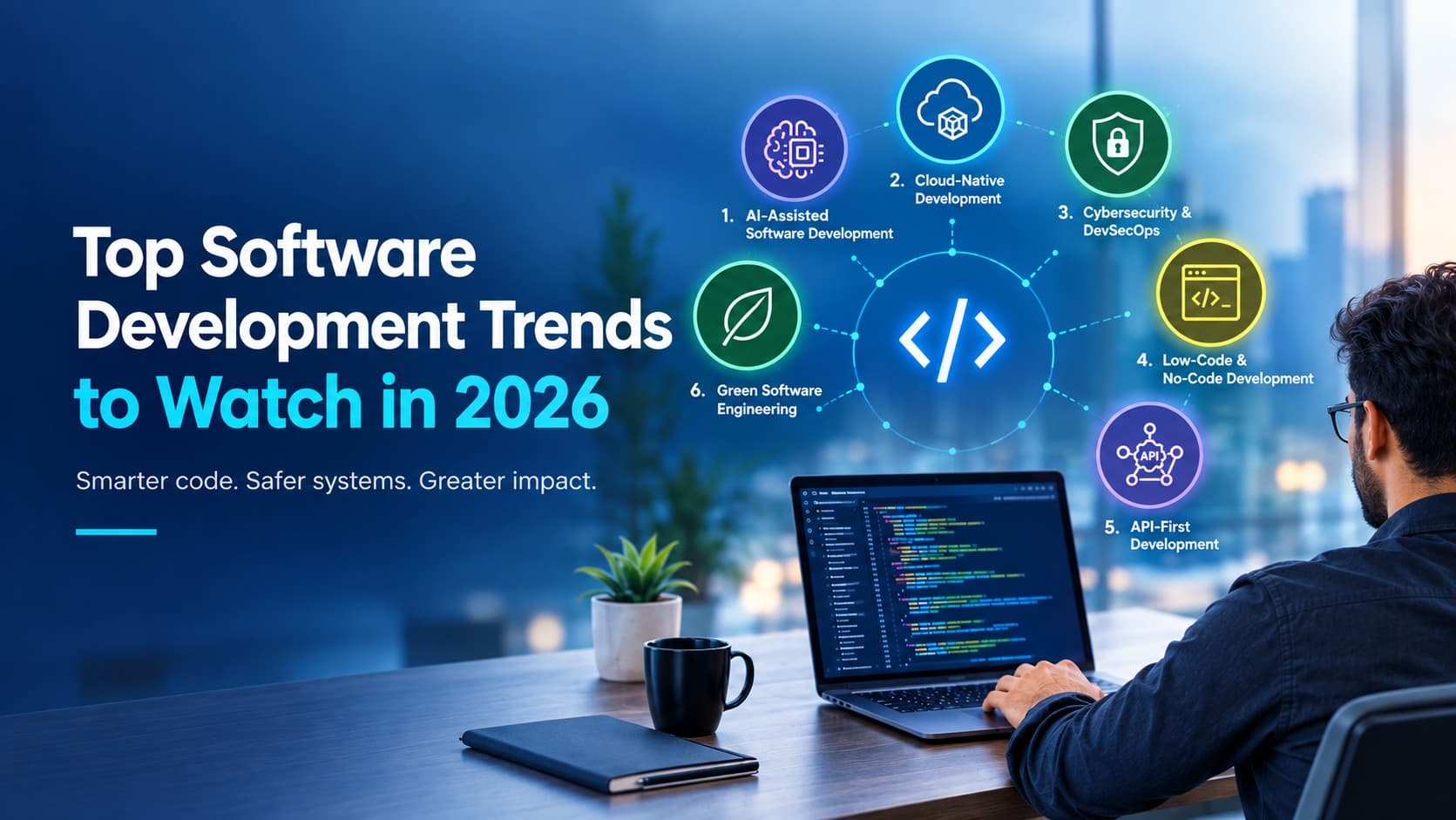
The software development industry is progressing at an unprecedented rate due to the rapid adoption of digital transformation by firms. The introduction of new technologies, shift in customer expectations, and increasing demands of safe, scalable, and smart software applications are transforming the process of building and deployment of software products. In 2026, companies are not only working on innovation but also on efficiency, security, and providing better user experience. It is important for firms to keep themselves abreast with the latest software development trends in order to remain ahead of competition. Following are the six emerging trends in software development for 2026.
1. AI-Assisted Software Development
Artificial Intelligence is one of the most important components of modern software engineering that enables engineers to become more efficient and precise in their work. AI-driven coding assistants can produce suggestions for writing code, automate routine coding activities, detect bugs in code, and also help to test the code and document it. This allows for saving a significant amount of time and creating a higher-quality code. Instead of substituting engineers, AI is an excellent collaborator that allows people to concentrate on solving difficult business problems and developing new software architecture.
2. Cloud-Native Development
Cloud-native software engineering remains one of the top developments in the world of software development. Rather than just deploying applications on the cloud, companies are engineering software to utilize cloud technologies like microservices, containerization, Kubernetes, and serverless architecture. Cloud-native applications offer increased flexibility, scalability, and reliability while ensuring regular updates with reduced downtime. Companies can benefit from the consistent performance and faster innovation provided by cloud-native software applications.
3. Cybersecurity and DevSecOps
In light of increasing complexities associated with cybersecurity threats, security now stands out as a critical component of the entire software development process. DevSecOps involves the incorporation of security measures into development and operation processes to allow early detection of any security threat and its remediation at an early stage. Automated testing for security threats, continuous monitoring, use of secure coding techniques, and compliance testing make it possible to develop resilient software without compromising on the software development process itself.
4. Low-Code and No-Code Development
Low-code and no-code platforms are revolutionizing the process of building software for organizations by streamlining the creation of applications. These platforms enable users without programming skills to build applications through visual development interfaces and ready-made modules. They are being increasingly used by businesses for automation, creation of their own business applications, and deployment of digital solutions. For professional developers, they can be useful for prototyping and handling other Routine tasks, which frees up their time for developing more advanced software.
5. API-First Development
As businesses rely on multiple digital platforms, third-party services, and interconnected applications, API-first development has become an essential software development strategy. In this approach, APIs are designed before the application itself, ensuring seamless communication between different systems from the beginning. This methodology simplifies integration, improves collaboration among development teams, and enables organizations to build scalable and reusable software solutions. API-first development also supports faster product development and makes it easier to expand applications as business requirements evolve.
6. Green Software Engineering
Sustainability is one area that is getting increased consideration during the development of software because of the need for businesses to become environmentally friendly and optimize costs of operation. Green software engineering involves developing applications that consume low amounts of energy through optimized algorithms, reduced computing activities, and better infrastructure utilization. The developers are also implementing effective strategies for managing clouds and resources to reduce energy consumption without affecting performance.
Conclusion
Software development in 2026 is being shaped by intelligent automation, cloud-first architectures, stronger cybersecurity practices, accessible development platforms, seamless system integration, and sustainable engineering. These trends reflect the growing need for software that is not only innovative but also secure, scalable, and efficient. Organizations that embrace these advancements will be better equipped to accelerate innovation, improve customer experiences, and remain competitive in an increasingly digital world. Staying ahead of these trends will help businesses build future-ready applications capable of meeting both current and emerging market demands.
To explore more insights on emerging technologies, digital transformation, and software innovation, check out our related blogs in the Aventus Informatics Thought Leadership section. Aventus Blogs