

Startups are often built on powerful ideas. Founders identify a problem, imagine a solution, and move quickly to build a product. Speed is celebrated in startup culture. “Launch fast,” “move quickly,” and “iterate later” are common mantras.
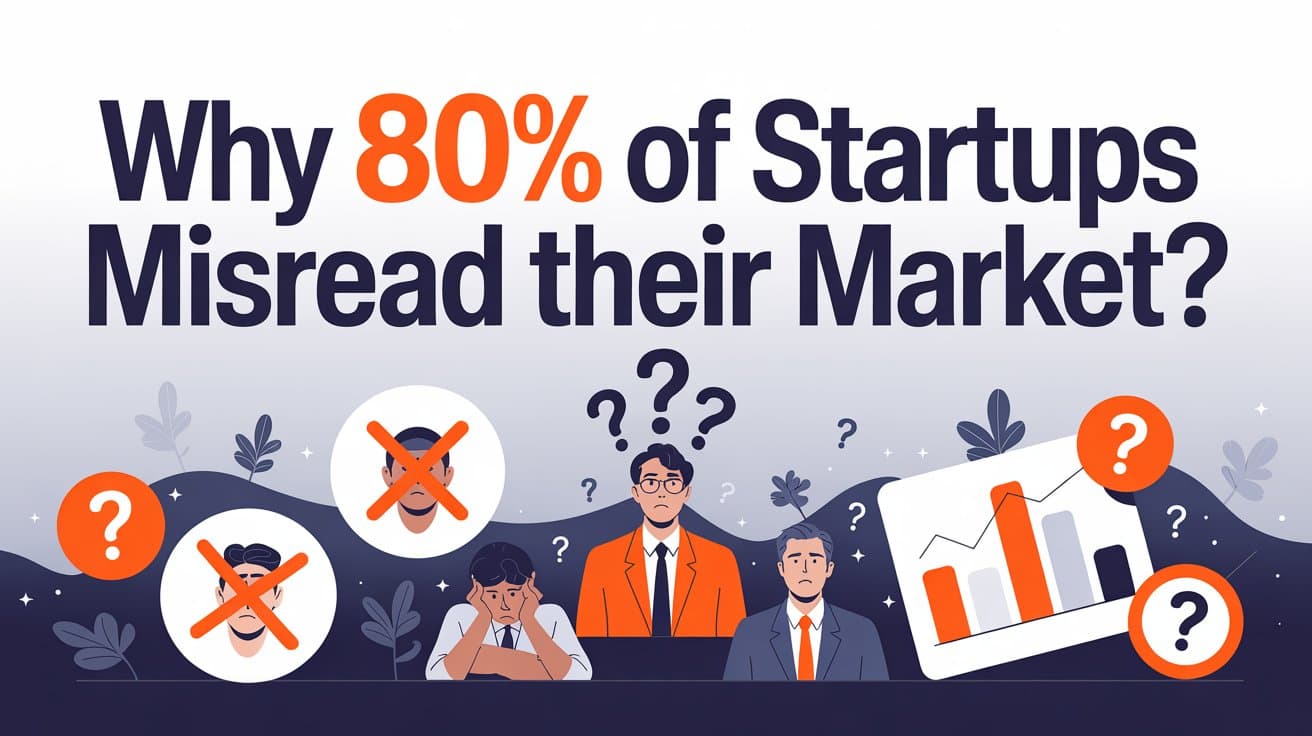
Yet despite this energy, many startups fail not because of poor technology or lack of effort, but because they misunderstood their market.
Misreading the market rarely happens intentionally. It usually happens through subtle assumptions, limited data, and cognitive bias. Understanding why this happens can help founders avoid one of the most common startup mistakes.
The Founder’s Bubble
Every business starts with a belief. Founders of businesses believe that their idea is going to work. But it is this very belief that gives rise to a bubble for founders. In this bubble, founders often end up making decisions based on their own experiences and sometimes even on what a handful of people they know might say. For instance, they might receive input from people who are similar-minded.
The issue is that these people might not represent the actual market.
People might have different needs, behaviors, and wants, and these might not have been fully understood.
Confusing Interest with Demand
Another common mistake is to mix up curiosity with genuine demand. When founders discuss their ideas, people around them tend to react positively. They might say a product sounds nice or express willingness to give it a try. However, being interested does not necessarily mean taking some kind of action. A person saying it looks cool is drastically different from that person actually paying for the product or using it because of the product. Quite a few newly, established businesses take initial excitement as a sign of their ideas being right while it is just normal politeness.
Overestimating Market Size
Market size projections are another area where startups frequently misread reality. Pitch decks often show large market numbers, but these numbers may represent a total theoretical market, not the segment that will realistically adopt the product.
For example, a founder might target “everyone who shops online,” but the real audience could be a very specific subset of users with a particular behavior or need. Overestimating the market can lead to unrealistic expectations about growth and revenue.
The Danger of Confirmation Bias
Humans naturally look for information that supports their beliefs. Founders are no exception. During product development, teams may unintentionally prioritize feedback that validates their idea while ignoring signals that suggest problems.
If ten people test a product and eight say it is confusing, but two say they love it, confirmation bias can lead founders to focus on the positive responses. Over time, this bias can distort how teams interpret their market.
Markets Are Dynamic, Not Static
Even when founders correctly understand the market at the beginning, the environment can change quickly. Consumer behavior evolves, new competitors enter the market, and technological advancements reshape what people expect from products and services. Successful businesses are usually the ones that keep watching their market instead of simply trusting their first guess. Understanding the market is not a single event. It is a continuing process.
From Assumptions to Insight
The difference between successful startups and failed ones often lies in how they replace assumptions with evidence.
This requires:
Market segmentation
Behavioral insights
Continuous feedback loops
Rather than asking whether people like an idea, effective research investigates how people actually behave, decide, and adopt new products.
Final Thought
Startups rarely fail because founders lack ambition. They fail because the gap between what founders believe and what the market truly needs becomes too large. Understanding a market is not about predicting the future perfectly. It is about reducing uncertainty through evidence. In a startup ecosystem that celebrates speed, the real competitive advantage may be something quieter but far more powerful:
"Understanding people before building for them."