


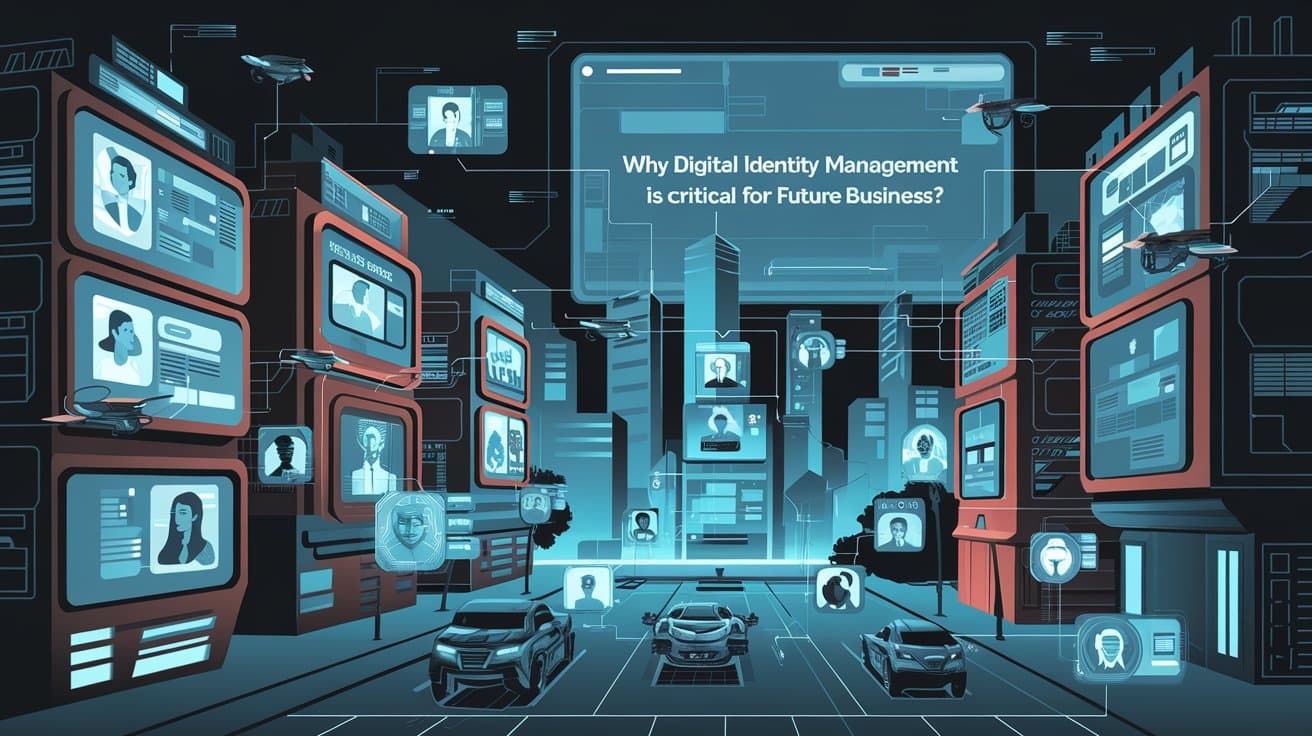
Why Digital Identity Management is Critical for Future Business?
How will you log into a website? Yes, it is through a username and password. By simply typing the password and username you can just enter into the website. But how will the system know it’s you? Just imagine that you are running a business. How will you protect your data by keeping your systems secure and ensuring everything works well? What will happen if you can’t? Here comes the role of Digital identity management. Let’s explore why it is important in the growing digital world.
What is Digital Identity Management?
Digital identity management is the creation, storage, and safeguarding of an individual or organization's identity in the online realm. This covers passwords, biometric details, user profiles, techniques of authentication, and authorization permissions. The aim is the protection of individual identities from unauthorized persons or processes while an authorized user can access these online resources. This could be anything from opening a customer account that has a username and password to the incorporation of multi-factor authentication (MFA) and biometric identification as additional security steps.
What are Digital Identifiers?
In the digital world, digital identifiers are unique codes, numbers, or bits of information that are used to verify people, things, or devices. Some examples are, Usernames, IP addresses, Social security numbers, Biometric data, and Cookies.
Why a Digital Identity Management Strategy is Essential for Your Business?
You can protect against identity theft and act as a guard to your customers and employees. The information that your company has is its concern. Thus, you are protecting yourself. Secondly, Knowing who has access to client information is the best way to keep it safe. When switching to cloud-based identification systems from traditional systems, think about how you can improve the security of your company. Consider how you can include security in your initiatives from the very beginning. Also, You are doing business globally when you do business online so It's important to have a digital identity management strategy that understands and complies with various data privacy rules and regulations.
What Are The Benefits of Implementing Digital Identity Management?
- Strengthen employees’ user experience: Employee user experience is streamlined via digital identity management, from onboarding to everyday duties. Contracts and other employment paperwork can be electronically gathered with digital identity management. Additionally, it guarantees that workers have access to the resources they require to carry out their duties
- Increase the levels of accuracy: Multiple data points make up a digital identity, so you may verify them by building a more accurate image of the individual. For instance, you can correlate the device, location, username, and password to get a complete picture of who is logging into the account.
- Increase efficiency: By using less paper and simplifying procedures, organizations can save money. Additionally, you have better insight into procedures that increase productivity and cut expenses because both internal and external users can have online experiences. These include enabling online shopping for clients and providing remote employment choices.
- Building Trust with Customers: Consumers are now more concerned about their privacy and data security than ever before. Trust is a major factor in any successful business relationship, and companies that ensure secure and transparent digital identity management systems will likely win customer loyalty. When customers have confidence that their personal information is safe and handled properly, they will be more willing to share data and conduct business. In a world where trust is hard to earn, having a secure digital identity management system is a competitive advantage
- Enhanced Security and Protection Against Cyber Threats: Cybercrime is today at its highest, thereby putting businesses in constant vulnerability to data breaches, theft of identity, and fraudulent activities. Strong digital identification management can safeguard both business-critical data and customer information. Thus, businesses can drastically reduce vulnerabilities to unauthorized access with the latest security measures, including two-factor authentication (2FA), Multi-factor authentication (MFA), and biometric authentications. More than that, a centralized identity management system allows businesses to immediately detect and respond to suspicious activity in real-time so that damage does not happen
What Are The Challenges of Digital Identity Management?
- Resource shortages: There are two types of resources in digital identity management, which leads to this problem. One is human resources, securely managing the digital identity requires efficient and qualified professionals. The second one is financial resources, small companies find it difficult to allocate sufficient funds for hiring, training the professionals, or investing in the technologies.
- The complexity of managing IDM systems: Digital identity management is complex because of various factors such as diverse systems, authentication mechanisms, authorization and access control, user life cycle management, security and threat management, scalability, and interoperability. It requires skilled employees to integrate systems, manage authentication methods, define and enforce access control policies, manage user life cycles, protect against security threats, ensure system scalability, and ensure interoperability between different identity management solutions and standards.
- The need to adapt quickly: In the digital world, rapid adaptation is what organizations need to stay ahead of security threats, respond to incidents, and comply with regulatory standards. It enables organizations to meet user expectations, gain a competitive advantage, and ensure user satisfaction and productivity by implementing updated security measures and integrating advanced identity management solutions that enhance security, operational efficiency, and customer trust.
- Changing business needs: Organizations have to adapt frequently to digital interactions, provide ease of access, and also ensure that security is up to the mark. New methods are in development, such as Agile and Lean development, which help adapt to changing business needs. Identity management needs to be flexible to support new projects or technological offerings. This also translates to the fact that technological debt, such as blockchain and AI, becomes an issue for organizations due to the lack of specific domain experts and money.
- Laws and regulations: These identity management practices must comply with laws and regulations, particularly those laid down in the General Data Protection Regulation and the Federal Act on Data Protection, which demand constant monitoring and detailed reporting. Privacy is another issue of the highest importance with the new FDPA covering the data of Swiss citizens, which mandates a matter of policy with explicit instructions on data security principles and possibly pre-emptive mechanisms for reporting cyberattacks or security breaches before any legal scrutiny is triggered
Conclusion
As businesses further embrace digital transformation, management of digital identities will play an even more critical role in operations. A well-developed digital identity management system is not only for security and compliance but also fosters customer trust, supports growth, and improves the user experience. Businesses that focus on secure, efficient, and user-friendly identity management will be best placed to thrive in a future that is increasingly digital and interconnected. The future of business depends on how well companies can manage digital identities, both their own and those of their customers, to build trust, reduce risk, and make interaction seamless. In the future, managing digital identities will not only be a pure security need but also a business advantage in operating in a digital age.