


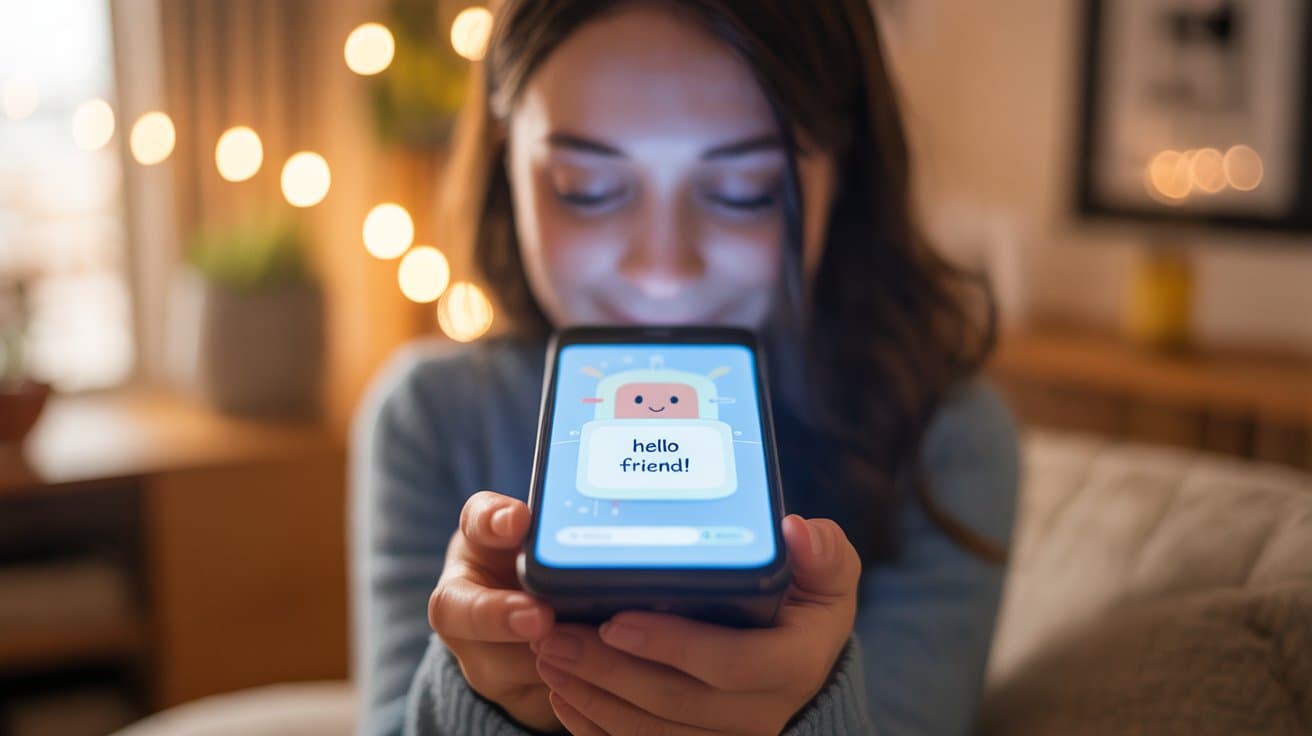
Have you ever found a strange comfort from using a meditation app? Or smiled when your fitness tracker chirps, “You crushed it today!”? Perhaps you’ve even softly whispered “thanks” to a journaling app after a tough day. If any of this sounds familiar, you’re not alone, and you are not imagining things. As we spend more time on our phones than with most people, something interesting is happening: apps are starting to feel like social companions. They are not just playing the role of support, but they are like digital buddies, cheering for us, calming us down, and showing up every day like the most reliable friend. But how does this happen? How does code, UI, and notifications elicit something that feels emotional and human? Let’s start exploring the psychology behind why some apps don’t just work for us; they connect with us.
The Rise of Companionable Technology
We are in an age where technology is no longer cold or mechanical. It is warm, responsive, and even emotionally intelligent. From AI chatbots that offer therapy-like support to journaling apps that nudge you to check in on your mood, today's best apps go beyond utility; they build relationships.
This is not accidental -it is psychological.
Why Apps Are Becoming Our New Emotional Support System?
Anthropomorphism: Giving Tech a Human Touch
Humans are biologically wired to connect. When an app communicates in a friendly tone, integrates emojis, or greets us by name, we instinctively begin treating it like a person. There is a term for this, which is called anthropomorphism, which means projecting human traits onto non-human things.
Apps like Replika, which offer chatbot companions, leverage this dynamic. They are built to remember your preferences, respond with empathy, and emulate emotional language, making users feel more seen and heard.
Even productivity apps, such as Notion or Todoist, have embedded personalization and encouragement techniques that allow the app to establish some trust or partnership with the user.
Routines Build Relationships
As friendship builds on daily check-ins with one another, the relationship with apps you interact with daily starts to feel more familiar and comforting. Think of a daily mindfulness prompt or an end-of-day mood tracker; it becomes highly placed in your routine. Through continued and regular interaction, the attachment builds to habitual levels, feeling a lot like emotional attachment.
Emotional Feedback Loops
Positive reinforcement drives many apps: confetti animations upon the completion of a task, and push notifications that say, “We missed you when we didn’t see you for a few days.” These moments create emotional feedback loops where the user’s brain continues to connect the app with positive experiences and validation, much like how we connect to our supportive friends. Apps like Duolingo execute this perfectly with crazy animated individuals and streak rewards. The owl character is just animated, but users experience an authentic emotional connection with it.
Personalization that feels personal
The more an app customizes to you, the more it feels like it "understands" you. Personalization creates this feeling of being understood, a universal human condition. This shared perception of understanding solidifies the illusion of companionship. When an app remembers your routines, customizes your content, or adjusts feedback/acknowledgement, it invokes emotional reciprocity like your best friend.
Loneliness and the Need for Connection
Loneliness is increasing, especially in the aftermath of the pandemic. Many people have started going to digital spaces for support, and these apps have evolved to fulfill that emotional need. Companion apps, wellness trackers, journaling apps, etc., are all low-risk, judgment-free spaces of self-expression.
Additionally, in a world that is sometimes overwhelming, having a "friend" in your pocket who can listen or guide you is significant.
Are Apps Replacing Human Bonds?
Not exactly. But they're augmenting them in impactful ways. Digital companionship is not an alternative to actual relationships, but a different way to interact, somewhere between practicality and empathy. It includes elements of psychology, design, and technology that take advantage of our built-in desire to relate to each other and machines.
Final Thought
As technology continues to become more emotionally intelligent, expect to see more apps that not only "talk" like friends, but also "care" like friends and may even "grow" with you. The real innovation is not in the AI or design, but in how these tools intend to understand and mirror what it means to be human. After all, sometimes the most supportive voice is not a person, but a push notification that knows exactly when to show up.