


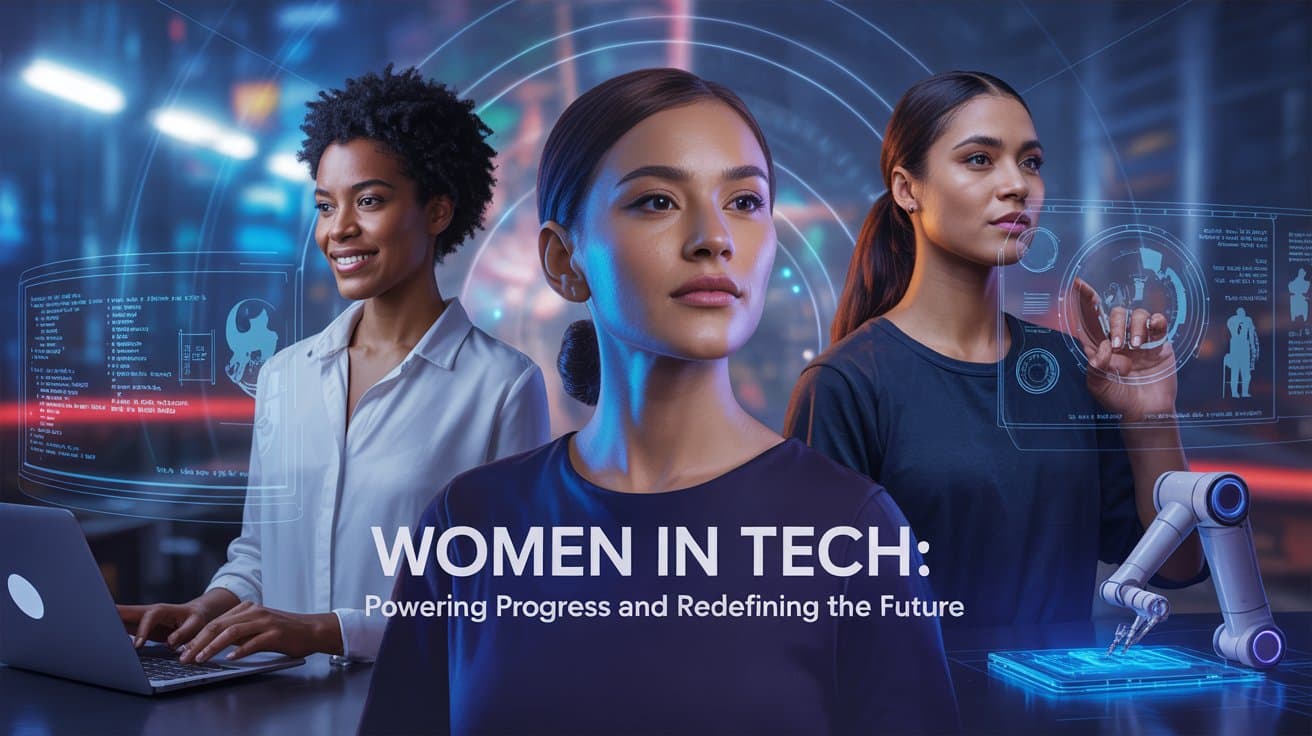
What comes to your mind when you think about the world of technology?
A hoodie-wearing developer in a darkened room? A suit that fills a boardroom? A caffeine-fueled, chaotic startup environment? It's time to update that mental picture that may be stuck in the past. Women today are rewriting the code, yes, literally, but not metaphorically. They're founding startups, developing inclusive platforms, redesigning user experiences, and embedding tech with empathy, ethics, and equity. They're not simply joining the industry but reimagining it from the inside out. This isn't only about representation. It's about redefinition. Let’s take a closer look at how women are driving innovation step by step, and why the future of technology is becoming more inclusive and creative because of their contributions.
Breaking The Binary
Gender imbalance has plagued the tech sector for decades. Slowly but surely, that is changing. Women are finally making their mark in every vertical, from software engineering and data science to product design and leadership. As they work to close the gap, they're also redefining the game, innovating in ways that transform the core of the business itself.
Whether it is Reshma Saujani advocating for coding confidence through Girls Who Code, or Whitney Wolfe Herd, who started Bumble and altered the traditional norms of dating with a women-first design, women are redefining what technology can be, and who it can be for.
Five Key Women Influencing Tech Right Now
Sheridan Ash – Founder and CEO of Tech She Can, a UK initiative aimed at inspiring and encouraging women to pursue careers in technology. The charity works with industry, government, and schools to help women find roles in technology by facilitating change and building better education for children.
Kimberly Bryant – Founder of Black Girls Code, a nonprofit organization headquartered in San Francisco that introduces girls of color between the ages of 7 and 17 to STEM education. The organization established the goal of teaching 1 million Black girls to code by 2040. It has 16 chapters in the U.S. and one in Johannesburg, South Africa.
Safra Catz - CEO of Oracle, one of the world’s leading enterprise software giants. She joined Oracle in 1999 and has played a hand in over 130 mergers and acquisitions, including the 10.3 billion dollar acquisition of PeopleSoft in 2004.
Kate Crawford - Co-founder of New York University's AI Now Institute. After earning her Ph.D. from the University of Sydney, she began a career studying the sociopolitical implications and applications of artificial intelligence.
Reshma Saujani- Founder of Girls Who Code, a non-profit organization that has impacted the lives of over 450,000 girls, mostly from low-income and underserved communities, to help them launch careers in tech. She is a former political candidate and author. She launched the organization in 2012 after witnessing the gender gap in coding during her congressional race in 2010.
Women's Contributions To The Field of Technology
One of the most valuable contributions women bring to the tech industry is diversity of perspectives. Women in technology provide a variety of perspectives that are frequently disregarded. Their unique perspectives, as well as their particular demands and specifications, are essential for creating products that serve a wider range of consumers. Diverse viewpoints from all groups can work together to produce more thorough and user-focused solutions. Women are widely recognized for their exceptional skills in time management and multitasking, abilities that can significantly boost productivity and efficiency in the fast-paced tech industry.
Moreover, women's innate propensity for compassion cultivates empathy, which in turn stimulates creativity. This empathy not only fosters an inclusive and collaborative environment but also enhances understanding of customer needs. When women participate in the tech sector, they inherently advocate for more inclusivity, which results in more creative and comprehensive approaches to problem-solving.
The Future Is Not Gendered—It’s Just Equitable
The future of technology does not entail changing one dominant voice for another; rather, it is about building a space and allowing different voices to shape the future. It is a future that is not gendered but equitable, where collaboration, empathy, and inclusivity are at the forefront. Women are not simply joining the tech world; they are building a different tech world. They are reinventing it by questioning the status quo, creating and reminding us to have ethical practices, and designing products to help the specific needs of real people. Their presence in the tech world gives a breath of fresh air that has made technology more user-centered and socially responsible. This isn’t just about adding more women to create balance. It’s about making real progress. The future of technology will not be shaped by who has the loudest voice; it will be about how many voices are invited to speak and be listened to.