


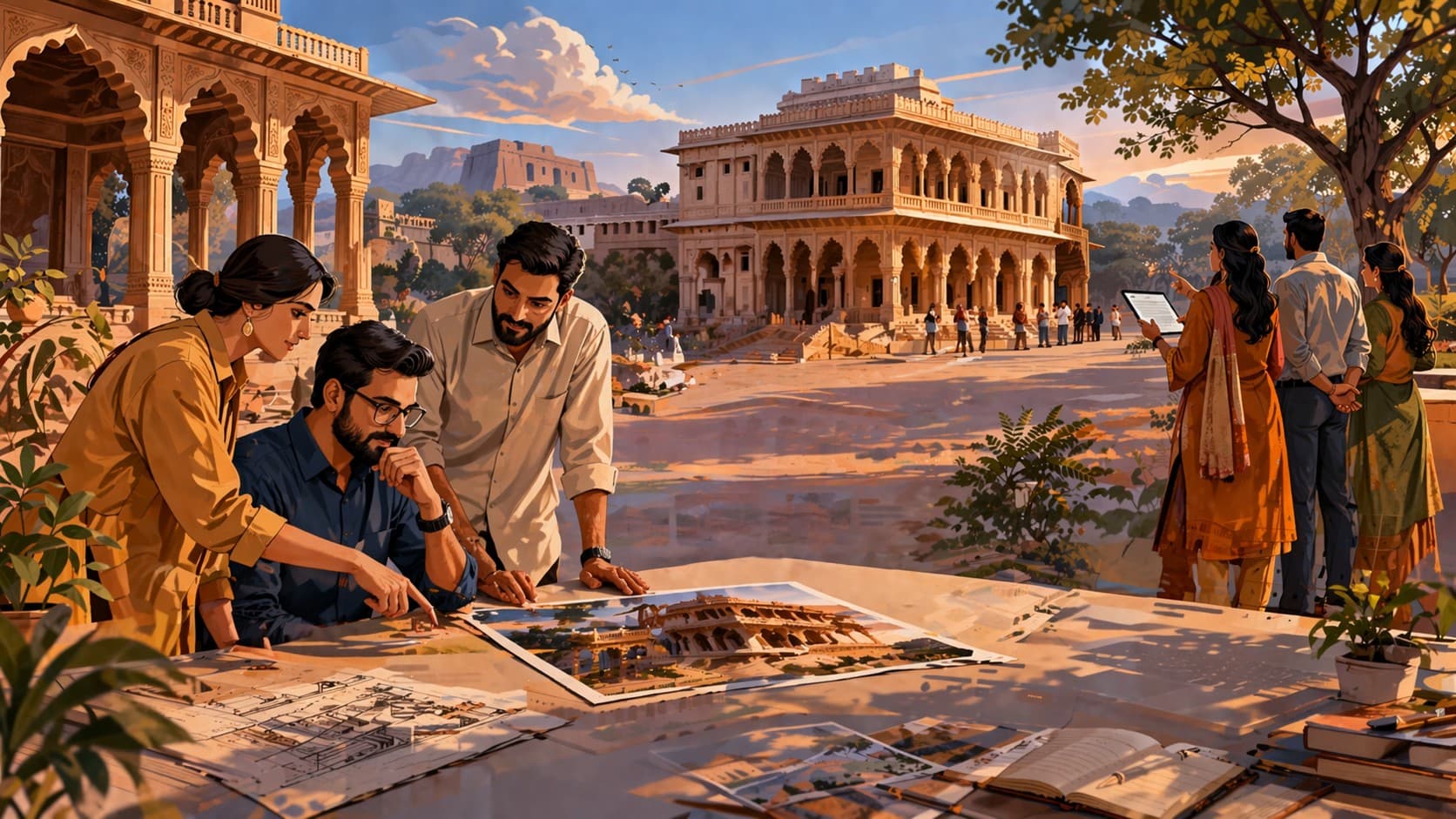
When Heritage Spaces Need Modern Access
Historic monuments often carry immense cultural value, but many of them remain underutilized because access to them is difficult to organize. While these spaces have the potential to host cultural events, workshops, and community gatherings, the process of discovering, requesting, and managing bookings is often unclear or manual.
The Gagan Mahal pavilion in Anegundi, Karnataka, represents one such heritage landmark. Built during the Vijayanagara period in the 16th century, the structure once served as a royal pavilion where women of the royal family could observe village festivities from its balconies.
After centuries of change, the monument had fallen into a semi-ruined state before undergoing restoration in 2022 under the guidance of the Deccan Heritage Foundation and heritage authorities.
With the restoration complete, a new question emerged: how could this historic structure become an active cultural space again while remaining protected and sustainably maintained?
Reimagining Heritage as a Living Cultural Space
Restoring a monument is only the first step in preserving it. For heritage sites to remain relevant, they must continue to be part of public life.
The vision for Gagan Mahal was therefore not limited to architectural restoration. The space was reimagined as a venue that could host a variety of activities, from cultural performances and exhibitions to workshops, film shoots, and private events.
To support this vision, the venue also needed a clear and accessible way for individuals and organizations to explore the space and request bookings. Without a structured digital interface, managing inquiries and communicating the venue’s potential would remain difficult.
This is where a digital platform could play a meaningful role.
Designing a Digital Gateway for a Historic Monument
The Gagan Mahal website was designed to function as a digital entry point to the heritage venue. Instead of presenting the monument only as a historical artifact, the platform introduces it as a space that blends history, culture, and contemporary use.
The site communicates the story of the monument, its architectural heritage, restoration journey, and cultural significance, while also explaining how the venue can be used for modern events. Visitors can explore the venue’s features, view images of the restored structure, and understand the types of events that can be hosted within the space.
The platform also simplifies the booking process. Individuals and organizations interested in hosting events at the venue can access relevant information and initiate booking inquiries through the site, making the process more transparent and accessible.
By combining storytelling with practical functionality, the website transforms the monument from a distant historical site into an approachable cultural venue.
Translating the Vision into a Digital Platform
Developing the website required balancing two distinct perspectives: preserving the dignity of a historic monument while making the platform modern and easy to use.
Through its development work on the project, Aventus helped translate the vision of the Gagan Mahal initiative into a structured digital experience. The focus was on presenting the monument’s heritage in a clear and respectful manner while ensuring that visitors could easily understand how the venue could be used today.
The platform organizes information about the monument, its history, and its booking possibilities in a simple, intuitive structure. Visual elements highlight the architectural character of the pavilion, while the site’s navigation ensures that users can quickly find details about events, venue capacity, and booking inquiries.
By integrating heritage storytelling with practical event information, the website serves both cultural and operational purposes.
Supporting Sustainable Heritage Management
One of the most important outcomes of the Gagan Mahal digital platform is the role it plays in sustaining the monument itself.
The venue is now available for curated events such as workshops, cultural performances, exhibitions, photoshoots, and private gatherings, creating opportunities for community engagement while generating resources for its ongoing maintenance.
Through this approach, the monument is no longer just a preserved structure, it becomes an active cultural space that contributes to the social and economic life of the surrounding community.
Bridging Heritage and Technology
The Gagan Mahal project illustrates how digital platforms can help historic spaces find renewed relevance in contemporary society.
By providing a clear digital interface for discovering and booking the venue, the platform supports both accessibility and preservation. Visitors can learn about the monument’s history while also understanding how it can serve as a venue for meaningful cultural experiences.
Through its work on the project, Aventus contributed to building a digital bridge between heritage and modern engagement, helping transform a restored monument into a living cultural destination.
In doing so, the Gagan Mahal platform demonstrates how thoughtful technology can support not only operational efficiency but also the long-term sustainability of historic landmarks.