


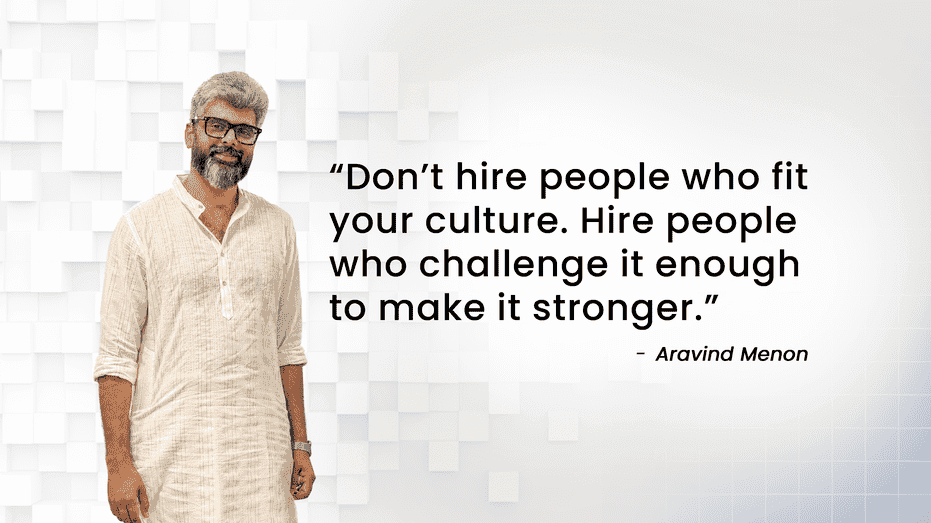
A few years ago, I sat in on an interview where the candidate was, on paper, almost perfect. Good experience, strong credentials, articulate, confident, and clearly knew the industry. The interview was going well until someone asked the inevitable question: “Do you think you would fit into our culture?”
The candidate paused for a moment and said, “I’m not sure. I’d probably disagree with some of you.”
There was an awkward silence.
Someone laughed. Someone else tried to soften the question. The candidate continued, “I mean, if you hire me because I agree with everything you already believe, I’m probably not going to add much value.”
I remember thinking that was probably the most interesting answer we had heard that day.
It also made me think about how casually we use the phrase “culture fit” in hiring. It sounds harmless. Almost responsible. We want people who understand how we work, who get along with the team, who share our values. All of that makes sense. But somewhere along the way, culture fit has quietly become a convenient way of hiring people who make us comfortable.
And comfort is not always a good thing in a business.
Think about the meetings where everyone nods. The strategy sounds brilliant. The presentation is polished. Nobody raises a difficult question. Everyone walks out feeling aligned. Then, two days later, someone privately says, “I actually thought the idea was terrible, but I didn't want to be the only person saying it.”
That is not alignment. That is fear wearing a corporate shirt.
The best teams I have worked with have never been teams where everyone agreed. They were teams where people could disagree without worrying about what would happen to them afterwards. Someone could question the strategy. Someone could challenge the timeline. Someone could say the customer research didn't support the decision. Someone could even tell the person at the top of the room, “I don't think you're right.”
And the meeting could continue.
That last part matters.
Because hiring people who challenge you doesn't mean filling the organisation with professional contrarians who disagree with everything just to prove they are clever. Nobody needs that person. You say “Let's go left,” and they say, “Why not right?” You say “Let's go right,” and suddenly they have a TED Talk on why the road itself is a flawed concept.
That's not constructive disagreement. That's just exhausting.
The people you want are different. They challenge assumptions because they care about the outcome. They ask uncomfortable questions because they see something you may have missed. They bring experiences you don't have and perspectives that don't naturally occur to you.
And sometimes they will be wrong.
That's fine too.
A healthy organisation doesn't require every disagreement to produce the correct answer. It requires enough disagreement for bad answers to be examined before they become expensive decisions.
I have always believed that a leader should be slightly uncomfortable with the people around them. Not because the team is dysfunctional, but because if everyone around you thinks exactly like you, you have no real advantage. You are simply multiplying your own blind spots.
There is also a difference between hiring for shared values and hiring for shared opinions. I absolutely want people who believe in accountability, honesty, ownership and doing good work. Those are foundations. But whether they think my strategy is brilliant, whether they agree with my approach or whether they would have made the same decision I made yesterday is completely different.
I don't need another version of myself sitting across the table.
I need someone who sees the things I don't.
This becomes particularly important as companies grow. When you're small, founders often make decisions based on instinct. You know the people around you. You know how they think. You can walk over to someone's desk and have a conversation. But as the organisation grows, there is a temptation to hire people who will preserve the way things have always been done.
That is exactly when you need the opposite.
Growth should introduce new thinking into the organisation, not just more people to execute the old thinking.
Some of the most valuable people in a company will not be the ones who make leadership feel brilliant. They will be the ones who occasionally make leadership rethink things.
That can be uncomfortable. Nobody enjoys discovering that their great idea isn't actually that great. Nobody likes being told that the strategy they spent three weeks developing has a hole in it. And nobody particularly enjoys hearing, “Have we considered that the customer might not care about this at all?”
But businesses don't improve because people protect our egos.
They improve because someone is willing to challenge them.
So the next time we're interviewing someone, perhaps we should ask fewer questions about whether they will “fit” and more questions about what they will bring that we don't already have.
Will they challenge our assumptions? Will they tell us when we're wrong? Will they see opportunities we might miss? Will they make the conversation better, even when they make it more uncomfortable?
Because I don't think the goal of hiring should be to find people who fit perfectly into the organisation we have built.
The goal should be to find people who can help build the organisation we haven't imagined yet.
And if that means occasionally hiring someone who makes you uncomfortable, disagrees with you, questions your decisions and refuses to politely nod in meetings, that's probably not a culture problem.
That's probably culture doing exactly what it is supposed to do.
Originally written on LinkedIn