


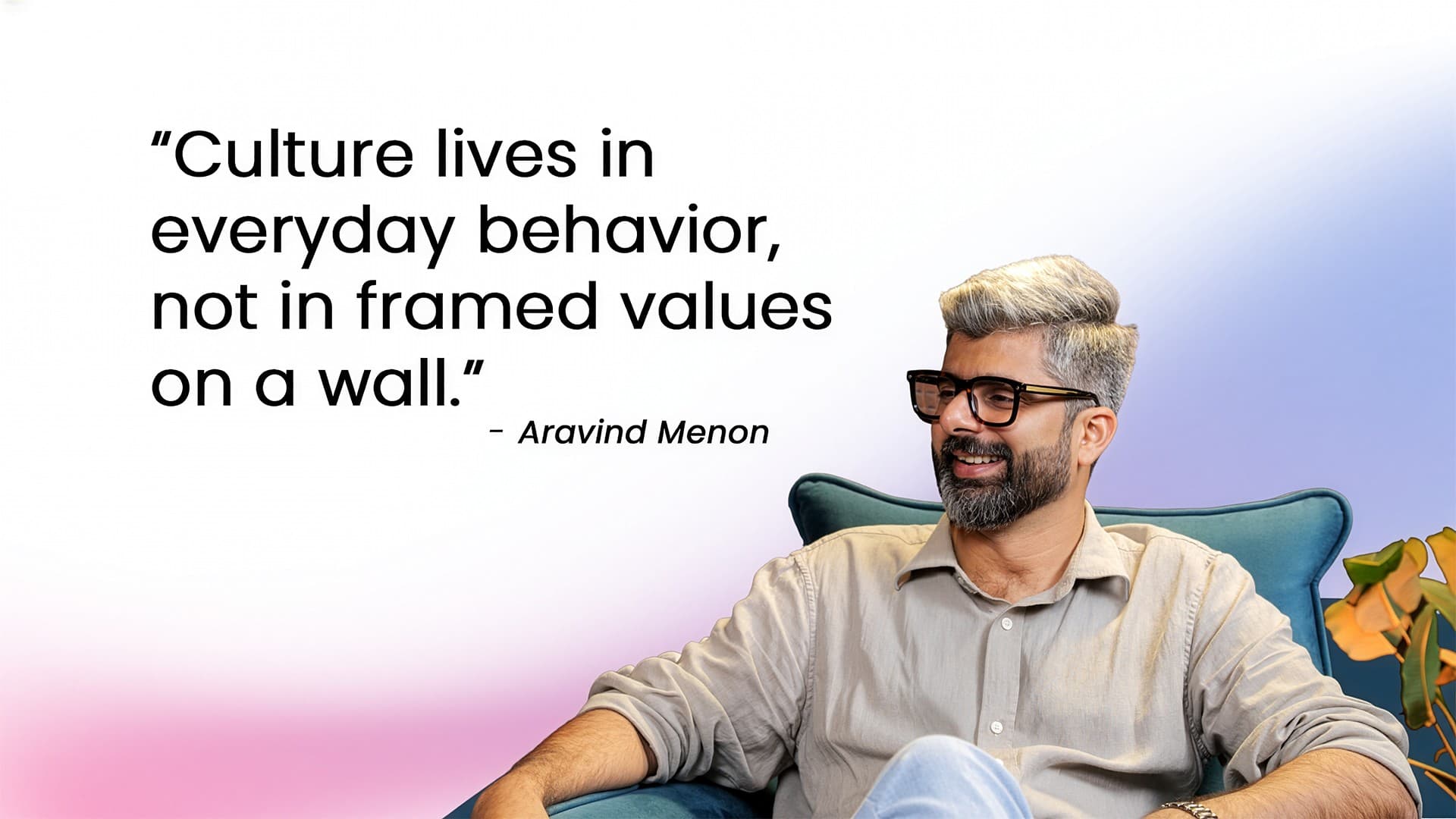
Culture is one of the most misunderstood words in business. Many companies talk about it as if it lives in vision decks, posters on walls, or annual offsites. But culture rarely shows up in big statements. It shows up in small moments that most people don’t pay attention to.
It shows up in how leaders respond when someone makes a mistake. It shows up in how teams speak to each other when there is pressure. It shows up in who gets heard in a meeting, who gets ignored, and what behavior gets rewarded without anyone saying it out loud.
A company can talk endlessly about respect, ownership, or collaboration. But people do not experience culture through words. They experience it through repeated moments. Through daily interactions. Through patterns. That is where culture becomes real.
A delayed reply, a leader losing patience, a manager giving credit, a teammate stepping in to help, someone being spoken over, someone being appreciated — these may seem small in isolation. But over time, these moments shape what people believe is normal inside an organization.
Strong cultures are not built through one big initiative. They are built quietly, in hundreds of ordinary moments that happen every day. Because people are always watching, always learning what matters here, even when nobody is explaining it.
This is why culture cannot be outsourced to HR or reduced to a company value statement. It is built by leadership, reinforced by teams, and protected by consistency.
The strongest cultures often do not look dramatic from the outside. They simply feel clear, respectful, and predictable to the people inside them. People know what is expected. They know how conflict is handled. They know that values are not just spoken about when things are easy.
In the end, culture is not what a company says about itself. It is what people experience in the small moments, over and over again. And those moments, more than any strategy document, shape the kind of organization a business becomes.
Originally written on LinkedIn