


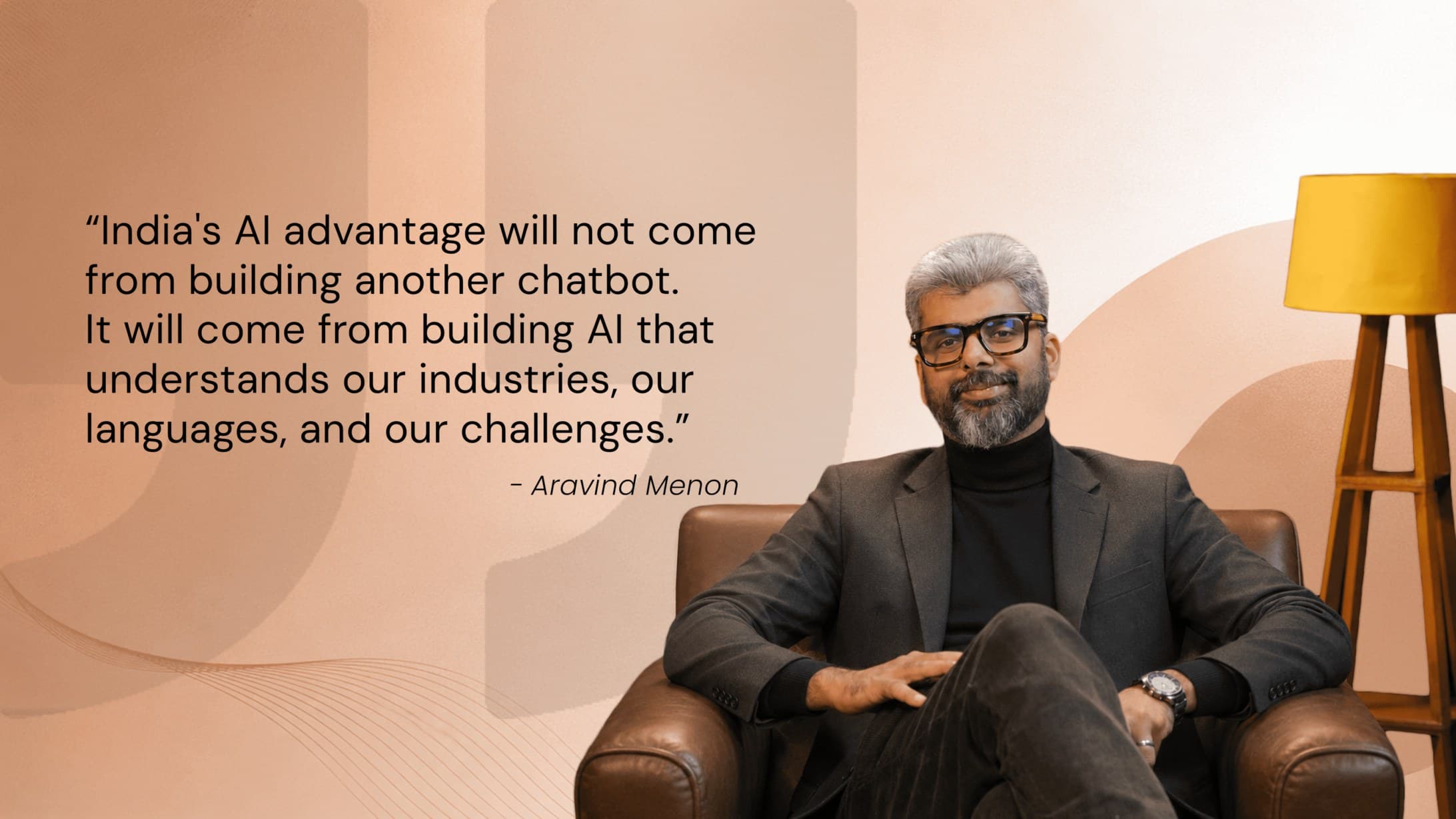
Over the past two years, artificial intelligence has become one of the most talked-about technologies in the world. Most conversations have revolved around chatbots, content generation, and whether AI will replace jobs. While these discussions are important, I believe they are distracting us from a much bigger transformation that is quietly unfolding, especially in India.
India's AI journey will not be remembered because we built another chatbot. It will be remembered because we found ways to embed artificial intelligence into the industries that power our economy.
This shift is already underway.
Hospitals are using AI to support faster diagnostics and reduce the time doctors spend on documentation. Manufacturers are deploying AI to predict equipment failures before they occur. Financial institutions are using AI to strengthen fraud detection and improve customer experiences. Educational institutions are exploring personalized learning, while businesses across sectors are beginning to automate repetitive tasks so that professionals can focus on solving more meaningful problems.
These are no longer experimental ideas. They are practical applications addressing real business challenges.
One of the most encouraging signs of this transition is the emergence of Indian companies building AI for Indian realities. Sarvam AI is a good example. Rather than focusing only on creating another general-purpose chatbot, the company has been investing in multilingual AI models and domain-specific capabilities that can support professionals, enterprises, and public services across India's diverse linguistic landscape. It reflects a broader shift in thinking. The opportunity is no longer just to build AI that can answer questions. The opportunity is to build AI that understands industries, workflows, languages, and local contexts.
That is where I believe India's biggest advantage lies.
The country's previous digital transformation laid the foundation for what is happening today. Over the last decade, initiatives such as Aadhaar, UPI, DigiLocker, and GST transformed the way citizens, businesses, and governments interact. They digitized processes, reduced friction, and created one of the world's strongest digital public infrastructures.
Artificial intelligence represents the next chapter of that journey.
The first phase of India's digital transformation connected people to digital platforms. The next phase is about connecting professionals to intelligence.
This distinction matters because AI should not be viewed as another software application. It should be viewed as an intelligent layer that enhances human expertise.
A chartered accountant should be able to spend less time reviewing documents and more time advising clients. A lawyer should be able to spend less time searching through case law and more time building stronger legal arguments. A doctor should be able to reduce administrative work and devote more attention to patients. An engineer should be able to identify problems sooner and focus on innovation rather than repetitive troubleshooting.
In each of these examples, artificial intelligence does not replace expertise. It amplifies it.
History has shown us that transformative technologies create their greatest impact when they become deeply integrated into everyday work. Electricity did not replace factories. It made factories significantly more productive. The internet did not replace businesses. It transformed how businesses communicate, operate, and grow. Cloud computing did not eliminate software. It fundamentally changed how software is delivered.
Artificial intelligence is following the same path.
Many organisations are still asking how they can use AI tools. I believe a much more valuable question is how artificial intelligence can fundamentally improve the way their business operates. The first question focuses on technology. The second focuses on transformation. Businesses that understand this difference will build a lasting competitive advantage.
Through my work with organisations across industries, I have noticed that AI conversations have become far more practical than they were even a year ago. Companies are no longer exploring AI simply because it is the latest trend. They are investing in AI because they want better decisions, greater efficiency, improved customer experiences, and stronger long-term competitiveness.
India is uniquely positioned to lead this transition. We have a robust digital public infrastructure, one of the world's largest pools of technology talent, and industries that generate enormous amounts of valuable data. Combined with the emergence of companies such as Sarvam AI that are building solutions for India's unique needs, we have an opportunity to create AI that is not only world-class but also deeply relevant.
The countries that lead the next decade will not necessarily be those that build the largest language models. They will be the countries that apply artificial intelligence most effectively to strengthen industries, modernise institutions, and solve meaningful problems.
I believe India's AI story will not be written by chatbots alone. It will be written in hospitals that deliver better patient outcomes, factories that become more productive, classrooms that provide personalised learning, financial institutions that make smarter decisions, and businesses that use intelligence to create real value.
That is where the real opportunity lies. More importantly, that is the story that India has already begun to write.
Originally written on LinkedIn