


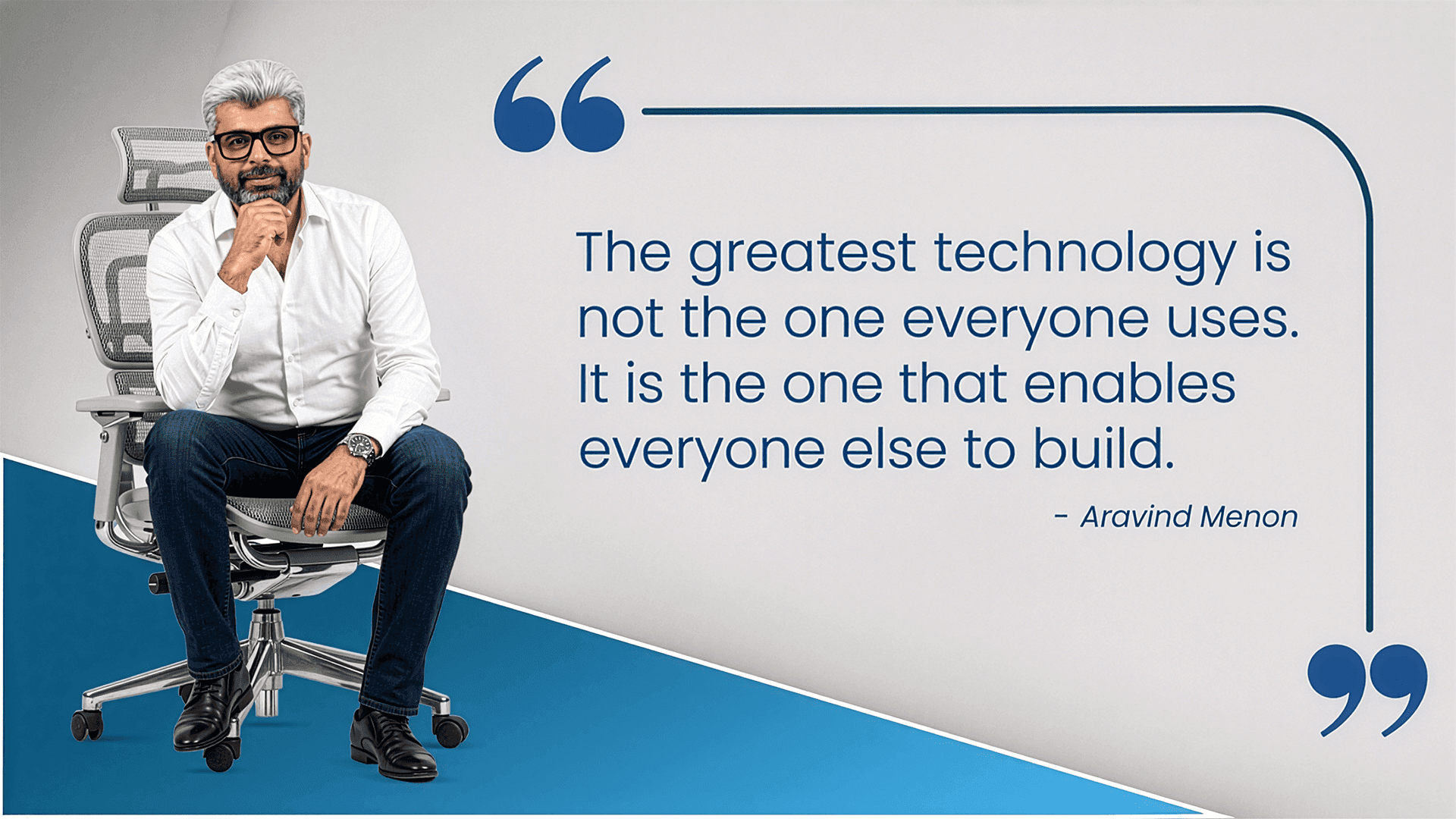
When most people think about UPI, they think about scanning a QR code to pay for a cup of tea or splitting a dinner bill with friends. We use it so effortlessly that we rarely stop to appreciate what is happening behind the scenes.
However, UPI was never just about making payments easier. It was about proving that technology could be built to serve an entire population, regardless of geography, income, or the size of the business using it.
That is what makes it one of India's greatest technology achievements.
Many countries have developed digital payment systems, but India approached the problem differently. Instead of building another payment product, India built digital public infrastructure. That distinction is important because products compete with one another, while infrastructure enables everyone to innovate.
Think about what UPI actually accomplished. A roadside tea vendor, a small neighbourhood grocery store, a multinational corporation, and a Fortune 500 bank all use the same underlying payment infrastructure. The technology does not discriminate based on the size of the user. Everyone has access to the same rails, and everyone has the opportunity to build on top of them.
This fundamentally changed how innovation happened in India's financial ecosystem.
Instead of every company spending years building its own payment network, organisations could focus on creating better customer experiences. Companies such as PhonePe Payment Gateway , Google Pay, Paytm , CRED , Amazon Payment Services, WhatsApp Pay, and hundreds of banks compete on innovation, features, and user experience rather than on owning the infrastructure itself.
That is exactly how healthy technology ecosystems should function.
The most successful infrastructure is often invisible. Today, millions of Indians complete transactions every day without giving a second thought to the technology powering them. In my opinion, that is one of the greatest compliments any technology platform can receive. When people stop noticing the technology, it means the technology has become reliable enough to become part of everyday life.
What makes this even more remarkable is that India made UPI available without charging consumers for every transaction. While several countries continue to debate the cost and accessibility of digital payments, India demonstrated that creating widespread adoption first could unlock far greater economic value over time.
The results are now visible far beyond India's borders.
Countries around the world are studying India's Digital Public Infrastructure model. Several nations have already partnered with India to enable cross-border UPI transactions, while many others are exploring similar frameworks for their own digital transformation. The global interest is not simply because UPI processes payments efficiently. It is because it demonstrates how technology can be designed to operate at population scale while remaining inclusive, secure, and interoperable.
In many ways, UPI represents a shift in thinking. It reminds us that the most valuable technology is not always the application that people interact with every day. Sometimes, the real innovation lies beneath the surface. Infrastructure creates opportunities for thousands of businesses to innovate, compete, and grow.
This philosophy extends well beyond payments. India has consistently invested in Digital Public Infrastructure through initiatives such as Aadhaar, DigiLocker, Account Aggregator, FASTag, and ONDC. Together, these platforms have shown that when governments, regulators, and private organisations collaborate around open standards, innovation accelerates across entire industries.
As someone working in technology, I believe this is the real lesson behind UPI. The next generation of transformative companies will not necessarily be the ones that build another application. They will be the ones that build platforms and infrastructure that allow thousands of others to create value.
Products solve problems for users.
Platforms solve problems for businesses.
Infrastructure transforms economies.
India did not simply create one of the world's largest digital payment systems. It demonstrated that technology, when designed with openness, interoperability, and scale in mind, can become the foundation for an entire nation's digital economy.
Perhaps that is why the world is not just adopting UPI. The world is studying it.
Because UPI was never just about payments.
It was always about proving what technology can achieve when it is built for everyone.