


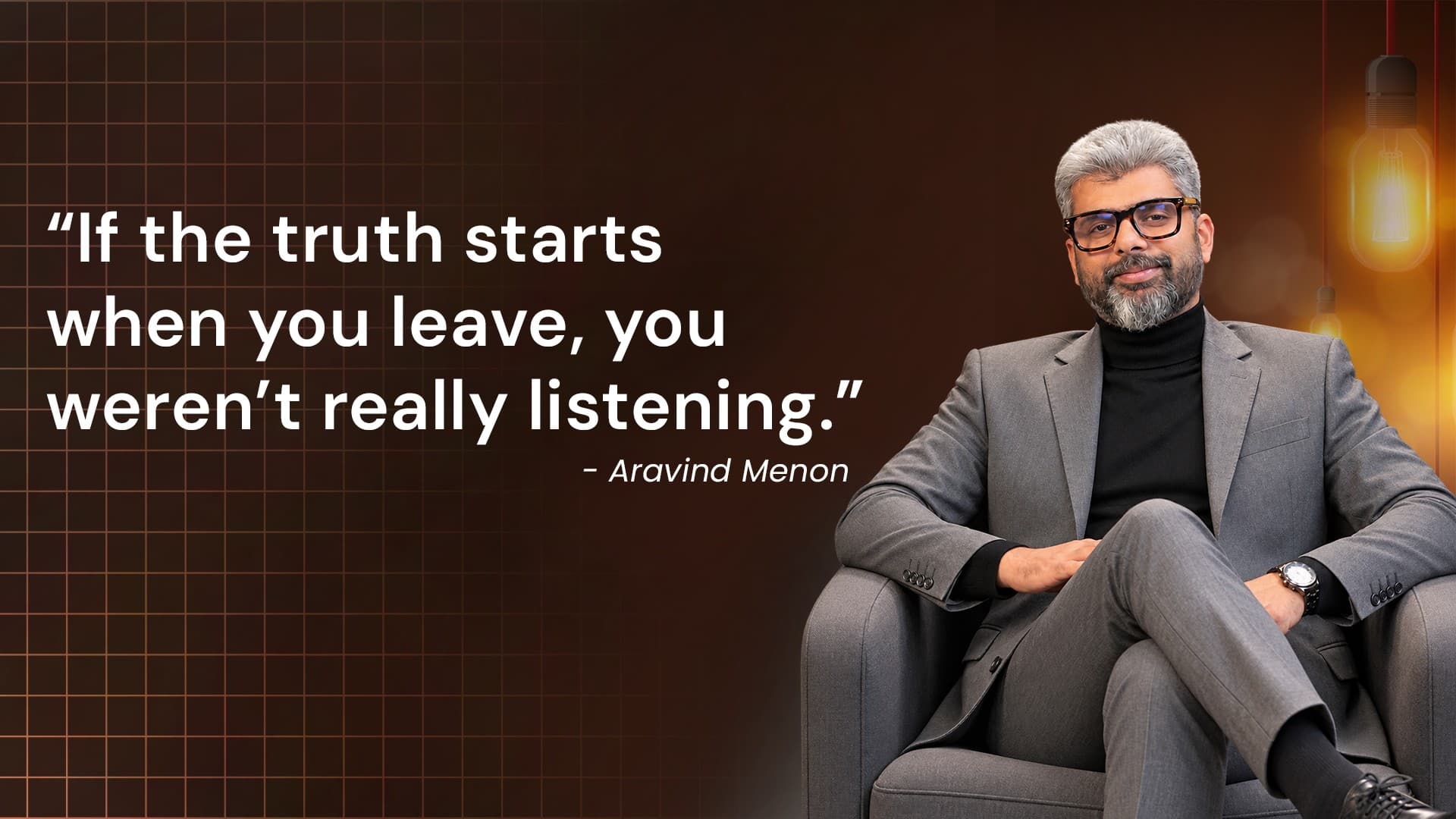
There is one employee engagement exercise no HR team needs to organise. No forms, no surveys, no anonymous links. Just leave the meeting room. Seriously. Walk out for five minutes and listen to what happens next. You might learn more about your organisation in those five minutes than you did from the last employee engagement survey.
I’ve always found it interesting how quickly the atmosphere in a room can change when the person at the top walks out. The conversation suddenly becomes lighter. Someone laughs. Someone says, “Okay, now can we actually talk about this?” And then comes the sentence that probably should have been said while the boss was still sitting there: “I don’t think this is going to work.” That’s when you know you have a problem.
And let’s be honest, leaders often make this happen without realising it. We like to think we are approachable. We tell people, “My door is always open.” But sometimes the door is open and the conversation still isn’t. You can tell people to speak freely all you want, but what really matters is what happens when they actually do. What happens when someone tells you your brilliant idea isn’t brilliant? What happens when a junior employee challenges your decision? What happens when someone says, “I think we made the wrong call”? Do you get curious, or do you immediately start explaining why you’re right?
Because employees are paying attention. They remember the person who spoke up and was dismissed. They remember the person who questioned a decision and was labelled “difficult.” They remember who stopped getting invited to meetings after disagreeing with someone senior. And employees are very good at learning from other people’s mistakes. Eventually, they stop speaking up. Not because they suddenly have nothing to say, but because they realise there is no point saying it.
That’s when you get the most dangerous kind of workplace: one where everyone appears to agree. Every meeting ends with, “Sounds good.” Everyone nods. Everyone says, “Absolutely.” Everyone leaves the room. And then the WhatsApp group begins. That is not alignment. That is theatre.
I would actually be suspicious of a team where everyone agrees with me all the time. Either I have somehow become the most intelligent person alive, which is unlikely, or people have become very good at telling me what I want to hear. I’d much rather have someone challenge me. Tell me the idea is bad. Tell me we missed something. Tell me the customer won’t buy it. Tell me I’m looking at the problem from the wrong angle. I may not agree with them, but at least I know what they really think.
And that is one of the most underrated privileges of leadership: having people around you who are willing to tell you the truth. Of course, that doesn’t mean every meeting should turn into a debate club. Disagreement for the sake of disagreement is just another form of nonsense. But good teams should be able to disagree without fear. You should be able to challenge an idea without attacking the person behind it. You should be able to say, “I think you’re wrong,” and still have lunch together afterwards. That’s culture.
Culture isn’t the posters on the wall, the fancy words in the employee handbook or the annual survey where everyone somehow becomes “highly engaged.” Culture is what people do when nobody important is watching. And sometimes, culture is what people say when the important person has just left the room.
So the next time you walk out of a meeting, don’t wonder what your employees are saying about you. Ask yourself something more useful: “Did I create a room where they could have said it to me?” If the answer is yes, congratulations. You might actually have built something valuable. If the answer is no, don’t blame your employees for having conversations without you. Maybe you gave them a reason to.
Because leadership isn’t about making sure everyone agrees with you. It’s about making sure people don’t have to wait for you to leave before they can tell you the truth. And if you really want to know what kind of leader you are, you don’t have to ask your employees. Just leave the room.
Originaly written on LinkedIn