


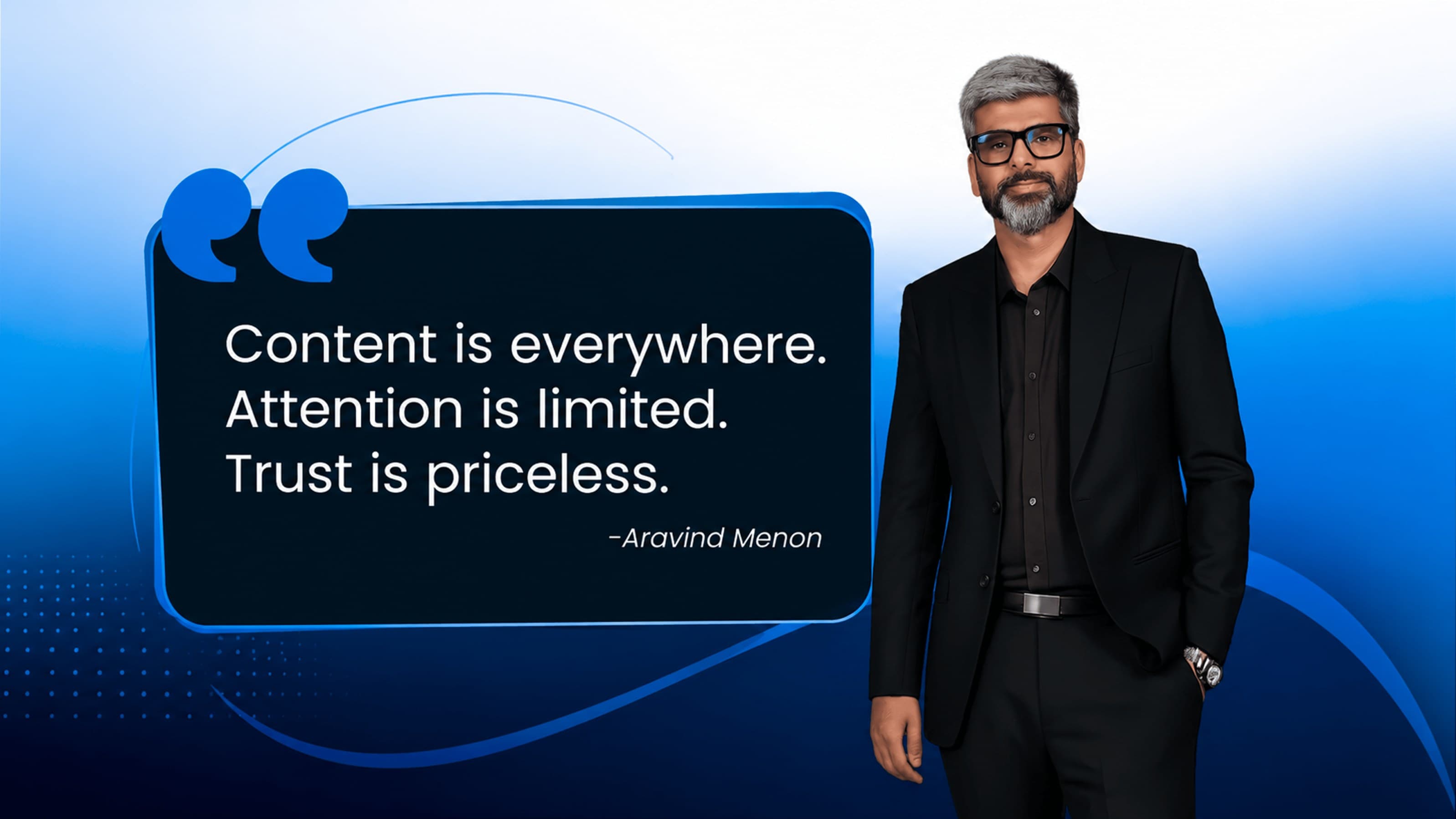
There was a time when content itself was a competitive advantage. Companies that published blogs regularly, maintained active social media pages, created videos, and produced marketing campaigns consistently often stood ahead of their competitors. Content production required time, resources, creative teams, and significant investment.
Today, that reality has changed.
Artificial intelligence has made content creation accessible to almost everyone. A startup founder can write articles in minutes. A marketer can generate dozens of advertising copies within an hour. Small businesses can create videos, social media posts, and email campaigns without large teams or agencies.
Content production is no longer difficult.
In fact, content has become abundant.
Every day, thousands of articles, posts, videos, newsletters, and advertisements compete for our attention. The internet has become louder than ever. While the quantity of content continues to increase, our ability to pay attention has not changed.
This is why content itself is no longer the competitive advantage.
The real advantage now lies in what AI cannot easily replicate.
Original thinking has become more valuable than content production. Artificial intelligence can summarize existing information, organize ideas, and generate words quickly. However, it cannot replace genuine perspectives, lived experiences, or unique insights. Businesses that develop their own point of view will always stand apart from those that simply produce more content.
Brand trust has also become increasingly important. Consumers understand that content can now be created instantly. As a result, people are becoming more selective about whom they listen to and which brands they believe. A trusted brand with a smaller audience often creates more impact than a larger brand that lacks credibility.
Customer understanding has become another critical advantage. Many organizations collect data, but very few truly understand the people they serve. The companies that spend time listening to customers, conducting research, observing behavior, and understanding emotions will continue to outperform competitors. Technology can process information, but it cannot fully replace empathy.
Unique experiences have become equally important. People may forget a social media post or a blog article, but they remember how a company made them feel. They remember excellent service, thoughtful interactions, meaningful experiences, and products that solve real problems. Experiences create emotional connections, and emotional connections create loyalty.
As someone working across research, marketing, and technology, I have started looking at artificial intelligence differently. I no longer see AI as a tool that simply creates content. Instead, I see it as a tool that helps us execute ideas faster.
AI can help us write.
AI can help us design.
AI can help us create.
However, AI cannot tell us what is truly worth saying.
The companies that will succeed in the coming years will not necessarily be the ones producing the highest volume of content. They will be the companies that think differently, understand customers deeply, build trust consistently, and create experiences that people genuinely remember.
Artificial intelligence has made content abundant.
Attention, trust, and original thinking remain scarce.
That scarcity may become the most valuable competitive advantage of all.
Originally written on LinkedIn