

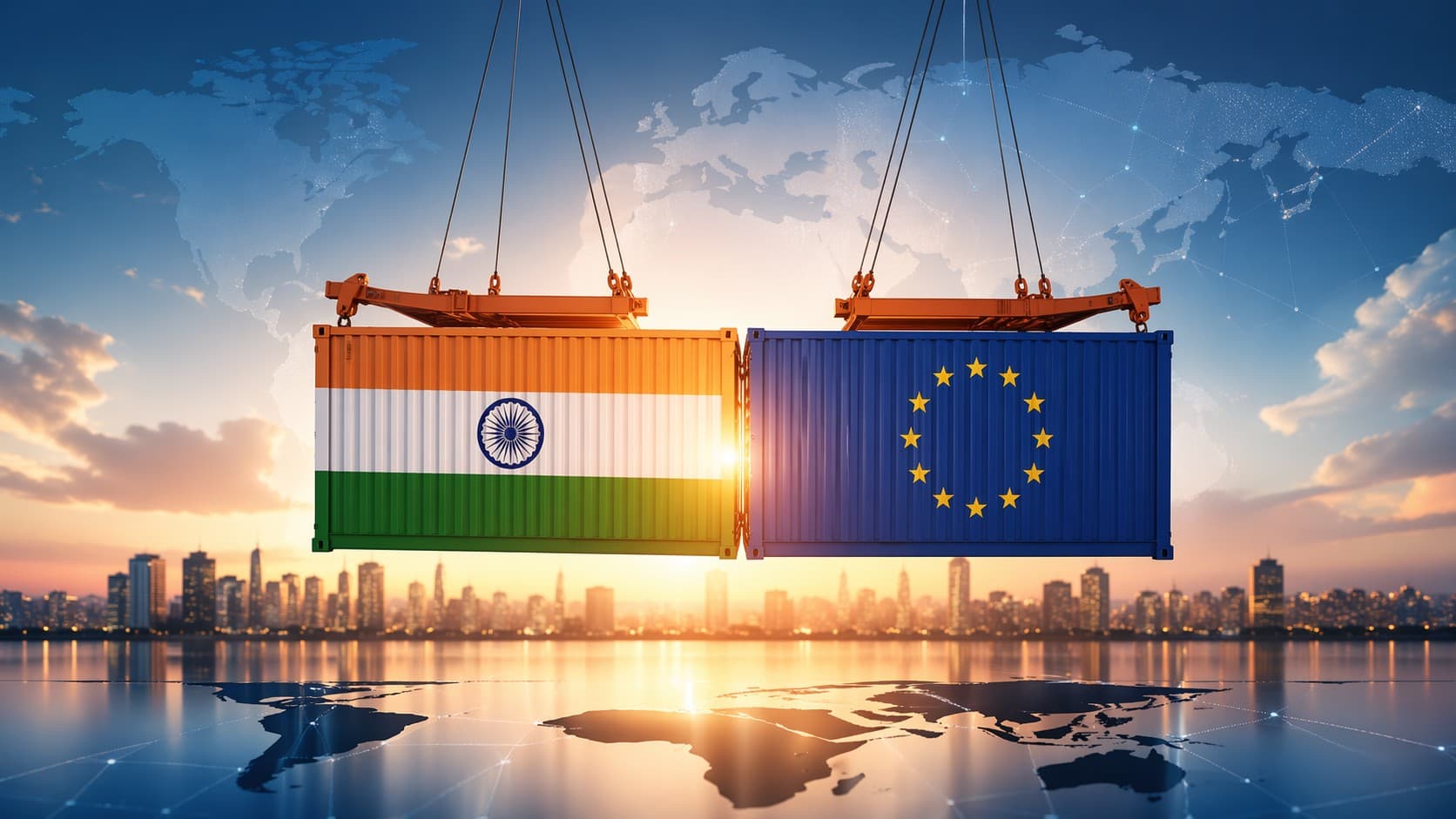
The India–European Union Free Trade Agreement is being celebrated as the “mother of all deals.” But this isn’t just another trade pact to applaud, it’s a high-stakes bet that could either catapult India into a new era of global economic power or expose long-standing structural weaknesses.
This deal is not about trade alone. It’s about power, positioning, and prestige.
For India, the FTA represents a bold declaration: that the country is ready to stop playing small in global markets. Access to the EU, one of the world’s largest and most sophisticated consumer blocs, could supercharge India’s exports, attract high-quality foreign investment, and push domestic industries to compete on global standards.
But here’s the uncomfortable truth: India cannot afford to treat this like a symbolic diplomatic win. If the country signs without preparing its industries, MSMEs, and regulatory systems for EU-level competition, the agreement could widen inequality, overwhelm smaller players, and benefit only a handful of corporate giants.
This Deal Will Reward Strength, And Punish Complacency
European trade agreements come with strings attached to sustainability rules, labor standards, carbon taxes, intellectual property protections, and data governance requirements. For Indian businesses that still struggle with compliance, efficiency, and global branding, this will be a brutal stress test.
Yet that’s exactly why this deal matters.
If India wants to become a serious global manufacturing and innovation powerhouse, it cannot continue relying on low-cost labor, weak compliance, or protectionist comfort zones. The EU FTA could force India to upgrade quality, improve governance, invest in green production, and move up the value chain, or risk being left behind.
Europe Isn’t Being Altruistic, And India Shouldn’t Be Naive
Let’s be clear: Europe is not doing India a favor. The EU needs India as a strategic counterweight to China, a hedge against geopolitical risk, and a growing market to revive European industries.
This agreement is a calculated European move to secure supply chains, expand influence in Asia, and lock in regulatory leverage.
India must approach this deal with the same strategic realism, not as a junior partner seeking validation, but as an equal power protecting its long-term interests.
The Real Question: Will India Rise to the Challenge?
This agreement could mark the beginning of India’s transition from an emerging economy to a rule-shaper in global trade. Or it could become another example of premature liberalization without domestic preparedness.
The “mother of all deals” won’t be judged by headlines or political optics. It will be judged by whether India builds globally competitive industries, protects vulnerable sectors, empowers MSMEs, and ensures the gains reach beyond boardrooms into real jobs and regional growth.
This is not just a trade deal. It’s a stress test for India’s economic maturity.
Also, India cannot afford to fail it.