

The Shift from Support Function to Strategic Driver
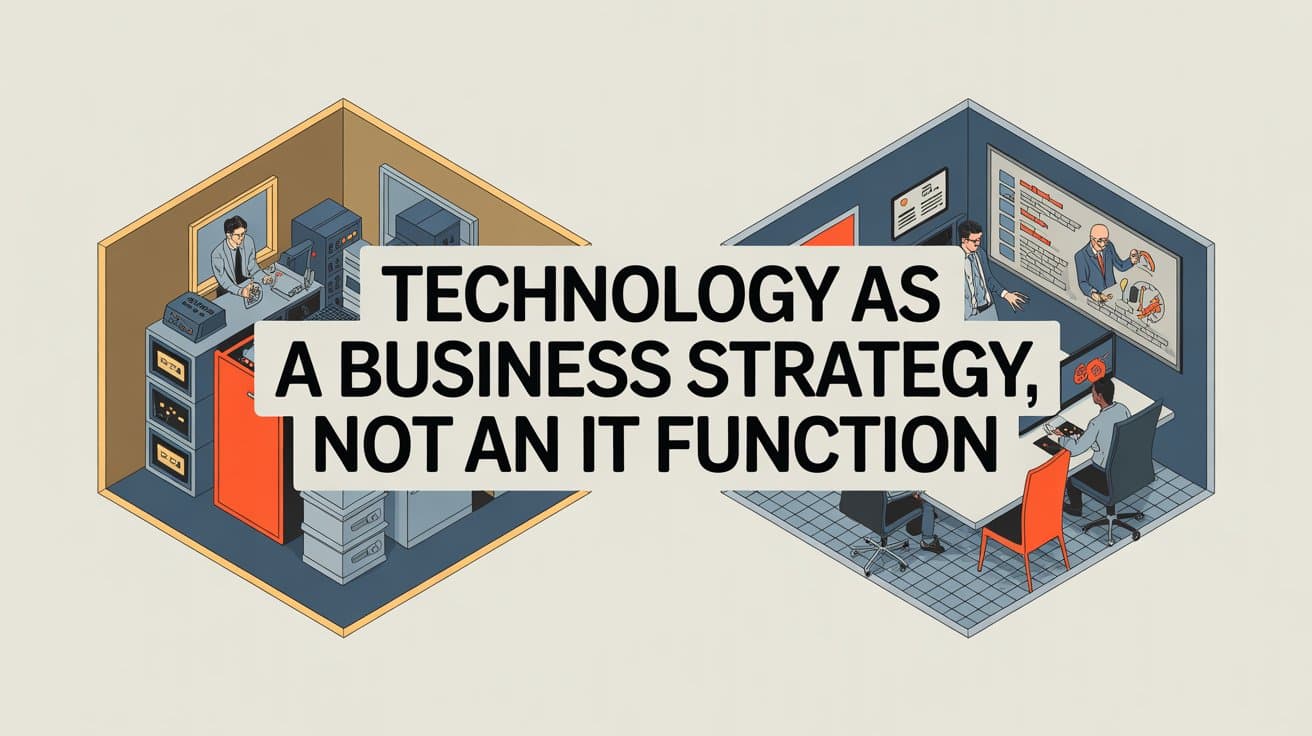
For many years, technology was viewed as an operational necessity, a department responsible for maintaining systems, managing infrastructure, and supporting business operations. IT functioned in the background while strategy, growth, and innovation were led elsewhere.
Today, that distinction no longer exists.
Technology has moved from being a support function to becoming a core business capability. Organizations no longer compete only through products or services; they compete through platforms, data, digital experiences, and operational intelligence. In this environment, technology is not something businesses use, it is increasingly how businesses operate, grow, and differentiate themselves.
Business Strategy Is Now Technology Strategy
Modern business strategy cannot be separated from technological decisions. Market expansion, customer engagement, operational efficiency, and innovation are all shaped by technological capability.
When organizations treat technology as an isolated IT responsibility, they often experience slow execution, fragmented systems, and disconnected customer experiences. Strategic objectives remain ambitious, but execution struggles because technology was never designed to support long-term business goals.
Forward-thinking organizations instead embed technology into strategic planning from the beginning. Technology choices define scalability, speed of innovation, and the organization’s ability to respond to market change. Strategy therefore becomes inseparable from digital architecture.
From Cost Center to Value Creator
Historically, IT investments were evaluated primarily through cost control. Technology budgets focused on maintenance, risk reduction, and operational stability.
The modern enterprise evaluates technology differently.
Digital platforms generate revenue opportunities, automation increases productivity, and data intelligence enables smarter decision-making. Technology shifts from being a cost center to a value creator, directly influencing growth, customer satisfaction, and competitive positioning.
Organizations that recognize this transition invest in technology not merely to support operations but to unlock new business models and market opportunities.
Enabling Agility and Innovation
The modern market changes much faster than the organization itself. Consumer expectations change quickly, competition is constantly evolving, and innovation appears suddenly. Technology organizations have one thing in common that makes them competitive – agility.
By having integrated systems, cloud computing, automation, and analytics, businesses can try out new approaches, learn, and grow without the need to redesign everything every time their strategy shifts. Innovation becomes sustainable. Technology helps organizations shift from episodic change management to constant evolution.
Leadership Responsibility Beyond IT Departments
One of the biggest changes seen in today’s business environment is the involvement of leadership in technological decision-making. It is no longer possible to leave all the decisions pertaining to technology strategies only to technical groups within a company.
It is important for the company’s executives to comprehend how technology shapes the company’s relationship with the customer, its efficiency, and helps in its growth. Hence, technology leadership becomes business leadership.
The Aventus Perspective
The first step at Aventus involves comprehending the business before embarking on technology development. The intention is not just creating systems but creating the digital platform to spur growth.
Strategic research sets the path, technology creates capabilities, and execution matches the business outcomes. Organizations should learn to harness technology in a way that allows them to grow and evolve into ecosystems primed for growth in the future.
Conclusion: Technology Defines Competitive Advantage
The organizations that will lead the future are not those with the most advanced tools, but those that recognize technology as central to business strategy.
Technology is no longer an IT function operating behind the scenes. It is the engine through which innovation happens, decisions are accelerated, and growth becomes sustainable.
In a digital-first economy, technology does not support strategy.
Technology is strategy.