


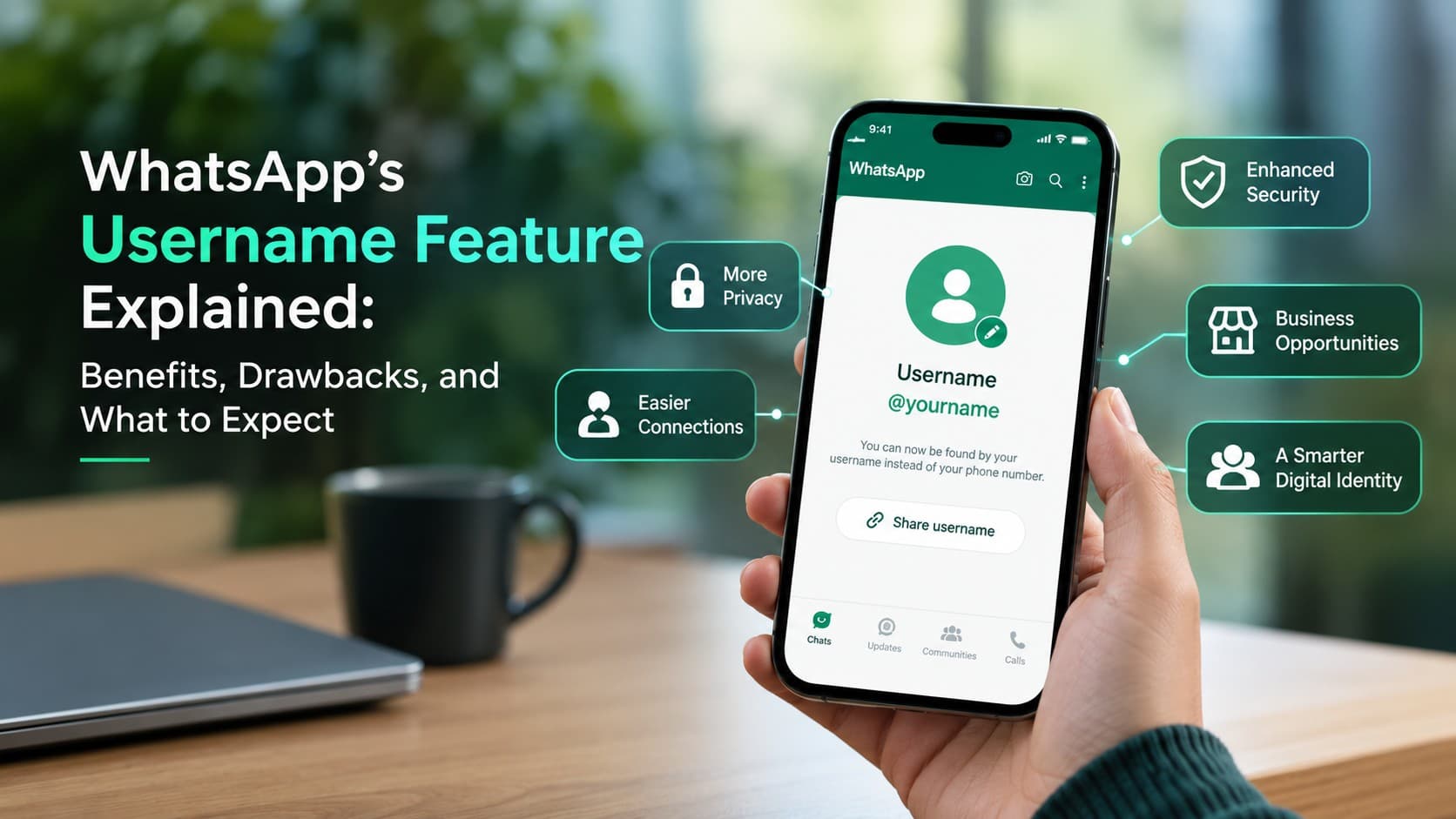
At Aventus Informatics, we view WhatsApp’s upcoming Username Feature as more than just another messaging update, it represents a meaningful shift in how digital identity, privacy, and business communication are evolving. As organizations increasingly rely on conversational platforms to engage customers, features that prioritize secure, seamless, and user-centric interactions will play a defining role in the future of digital communication.
The introduction of usernames reflects a growing industry trend toward reducing reliance on personal identifiers while enabling easier and more secure connections. Although phone numbers will continue to underpin account registration and verification, allowing users to interact through unique usernames marks an important step toward privacy-first communication.
A Shift Toward Privacy-Centric Digital Identity
Phone numbers have been used for many years to provide identities on message-based services. Even though it works well, it involves sharing one's personal details to start communication. With the advent of usernames, people can now communicate without having to share their phone numbers right away.
From our point of view, this is consistent with the general trend towards privacy by design, whereby the user is given the ability to control his discovery and contact through technology. As we move towards more advanced digital spaces, there is an increasing need to manage identities in an accessible yet secure way.
Opportunities for Businesses
In addition to individual users, there are various business aspects associated with the Username Feature that is applicable when using WhatsApp as a channel of customer engagement.
A clear and recognizable username could be an effective way to increase brand awareness and help in customer interactions without causing any difficulties with the onboarding process. Instead of requiring users to enter and confirm their phone number, companies might eventually be able to point their users to an easily remembered digital identity.
With the development of conversational commerce, such an approach could have its advantages.
Strengthening Security Without Eliminating Risk
Even though the use of usernames provides enhanced privacy, it is important to realize that there are still many cybersecurity issues that can arise because of username impersonation and other forms of fraud.
Businesses and individuals must remember that usernames should be considered only as one aspect of the entire process and not the only solution to their cybersecurity problems.
Aligning with Broader Technology Trends
This is part of an industry-wide change that is taking place in the digital space. The evolution of messaging apps into integrated communication platforms is becoming more common.
The Username Feature supports many emerging industry trends:
Privacy-first digital experiences.
Simplified identity management.
Seamless customer engagement.
Secure and scalable communication.
Increased integration of messaging platforms with business ecosystems.
What to Expect
With the gradual implementation of the Username Feature by WhatsApp, its usage is expected to expand from private communication to business communication, customer service, and other forms of digital engagement. Businesses that make themselves proactive about such developments can gain more advantages in providing customers with a smooth and secure experience.
Rolling out a feature at WhatsApp's scale is not just about introducing new functionality, it requires balancing user experience, security, backward compatibility, and system performance. As we discuss in our article, The Hidden Challenges of Software Product Development successful digital products are built by carefully aligning technology, scalability, and user needs throughout the development lifecycle.
Even though the feature seems to be minor in itself, in the long run, it may have some impact on businesses.
Our Perspective
At Aventus Informatics, we believe WhatsApp’s Username Feature is indicative of a broader shift toward privacy-centric, identity-driven digital communication. Rather than viewing it as a standalone product enhancement, businesses should recognize it as part of the ongoing evolution of customer engagement and digital transformation.
The organizations that embrace these changes early, by prioritizing secure communication, user privacy, and frictionless customer experiences, will be better equipped to meet the expectations of an increasingly connected digital world.